


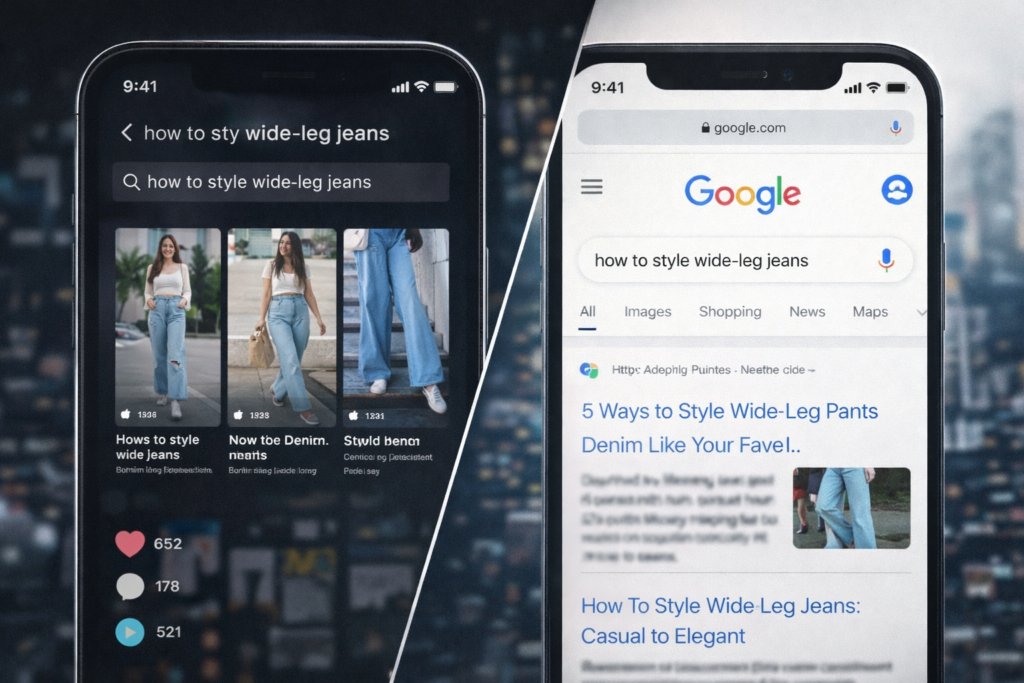
Have you used TikTok as a search engine?
TikTok is no longer just a place to scroll for entertainment. More users are now opening the app to look things up.
From restaurant reviews to fashion advice to breaking news, TikTok is increasingly being used the same way people once used Google.
This shift is happening quietly, but it is already changing how content spreads and how creators are discovered.
TikTok as a Search Tool
Younger users, especially Gen Z, are searching directly inside TikTok. They are typing full questions into the search bar instead of keywords.
Examples include:
- “Best coffee shops in LA”
- “How to style baggy jeans”
- “Is this TikTok trend real?”
The results they get are videos, not links. That feels faster and more personal than scrolling through web pages.
According to multiple platform trend reports, TikTok has become one of the first places users go for discovery, not just entertainment.
Why TikTok Search Feels Different
Traditional search engines focus on relevance and authority. TikTok focuses on usefulness and retention.
Videos that clearly answer a question tend to perform well. So do videos that feel authentic, even if they are not polished.
Creators who speak directly to the camera often rank higher than highly produced content. Viewers trust people more than brands.
This is part of a larger shift in how audiences consume information. Platforms are competing not just for time, but for attention and trust. We see this same battle playing out across streaming and social platforms, as covered in our analysis of audience engagement wars.
What TikTok Is Actively Pushing
TikTok has been quietly encouraging search-friendly behavior.
Creators are now prompted to:
- Say keywords out loud in videos
- Use descriptive captions
- Answer specific questions clearly
- Add on-screen text that matches search intent
When a video performs well in search, TikTok often displays a small search label above it. This shows what users are actively looking for.
That feature alone signals how important search has become inside the app.
What This Means for Creators
Creators who rely only on trends may struggle long-term. Trend spikes fade quickly.
Search-based content lasts longer.
Videos that answer common questions can keep getting views weeks or even months later. This creates steady traffic instead of short bursts.
Fashion creators have already adapted to this. Many now post outfit videos designed around searches like “how to style” or “what to wear.” That shift is visible across TikTok fashion content.
What This Means for TikTok
TikTokis positioning itself as more than a social app. It is becoming an information layer. More and more users are using TikTok as a search engine.
If users search TikTok first, that changes how news spreads, how brands market, and how influence is measured.
It also puts TikTok in direct competition with traditional search platforms, even if the company rarely says that out loud.
What Happens Next
Search-first content on TikTok is still early. Many creators have not adapted yet.
That creates an opportunity.
Creators who understand search intent now may benefit later, as competition increases and TikTok continues refining its search tools.
TikTok News Hub will continue tracking how this shift impacts discovery, visibility, and creator growth.
You Might Also Like
- The End of the Troll: Understanding Rage-Bait Regulation on TikTok
- The Future of Digital Presence: A Deep Dive into AI Likeness Licensing
- The Labubu Economy Pop Mart Trend: The Definitive 2026 Market Analysis
- The 365 Buttons TikTok Trend: A Movement Against Overthinking
- The Jon Hamm Dissociation Dance: A Cultural Icon of 2026