Why TikTok Trends Feel Shorter Than They Used To
Why TikTok Trends Feel Shorter Than They Used To
TikTok trends feel shorter than they used to, and creators are not imagining it. A sound can dominate the platform one week and feel completely gone the next. What once lasted months now burns out in days. Understanding why TikTok trends feel shorter than they used to requires looking at how the platform’s algorithm, creator behavior, and audience habits have fundamentally changed.
This shift is not accidental. It is the result of TikTok optimizing for speed, relevance, and constant novelty rather than longevity.
The Acceleration of TikTok’s Algorithm TikTok’s algorithm
now prioritizes rapid feedback loops. When a trend begins, the platform tests it aggressively across different audience segments. Engagement signals such as rewatches, saves, comments, and completion rates determine whether a trend deserves further distribution. This testing phase happens much faster than it did even two years ago. Videos either prove themselves quickly or get deprioritized just as fast. As a result, trends spike hard and collapse early. This acceleration explains why TikTok trends feel shorter than they used to, even when participation is high.
Oversaturation Happens Almost Instantly
When a trend starts gaining traction, thousands of creators jump on it within hours. TikTok’s low barrier to entry makes participation easy, which accelerates saturation.
Audiences see the same format repeatedly in a short window. Familiarity sets in fast. Once viewers recognize the pattern, engagement drops. TikTok interprets that drop as fatigue and moves on.
Earlier TikTok eras allowed trends to breathe. Today, oversaturation happens before many creators even notice the trend exists.
The Rise of Micro-Trends
Trends on TikTok no longer need mass adoption to succeed. Micro-trends now dominate the platform. These trends may only circulate within a niche community, a specific interest group, or a regional audience.
Because micro-trends never aim for platform-wide reach, they also fade faster. They serve a moment, satisfy a group, and disappear.
This fragmentation contributes directly to why TikTok trends feel shorter than they used to. There are simply more trends competing for attention at the same time.
Creator Behavior Has Changed the Lifecycle
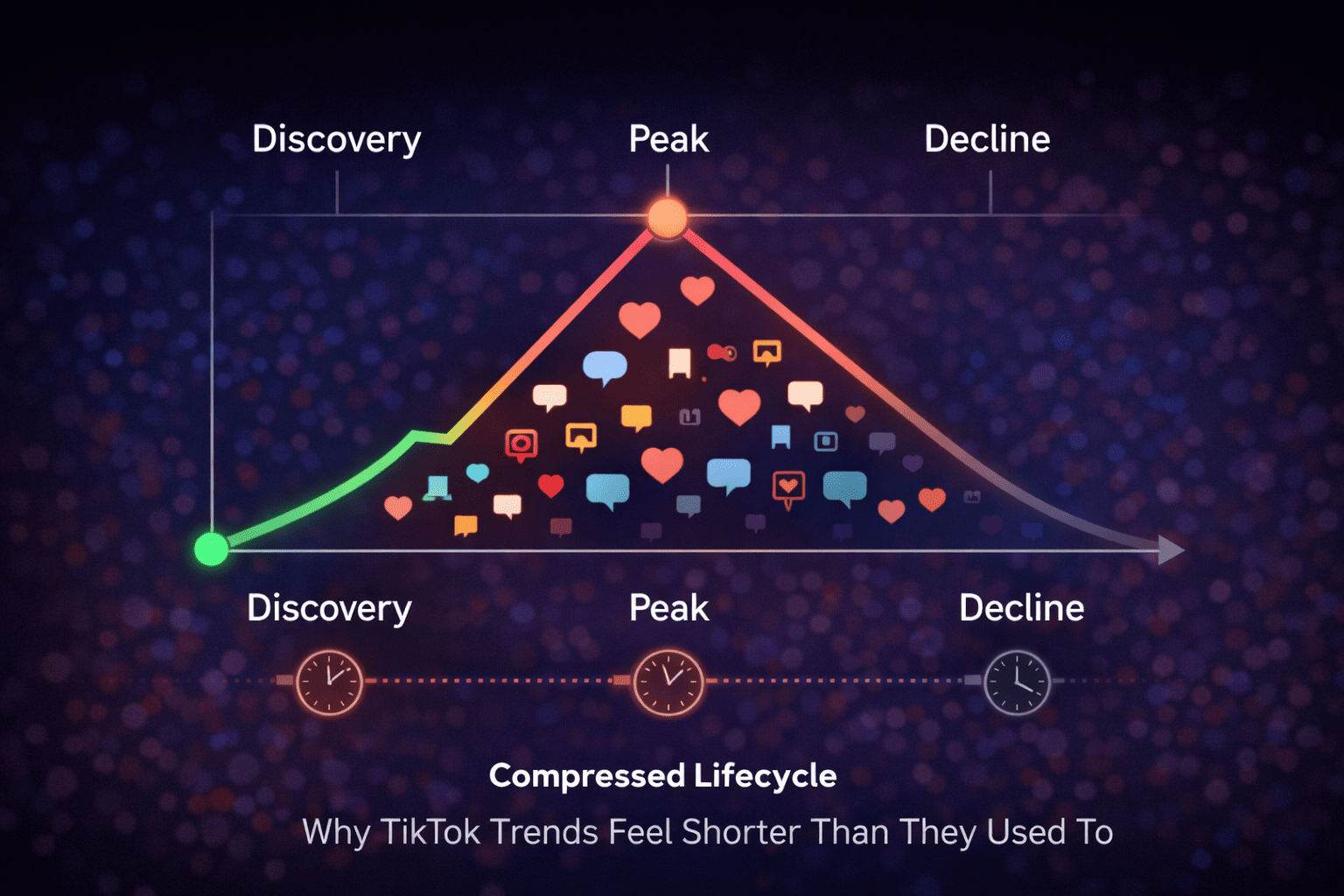
Creators have become more strategic. Many now chase trends late on purpose, remixing formats after the initial wave peaks. Others avoid trends entirely in favor of evergreen or utility content. This behavior reduces the long tail of trends. Instead of gradual decline, trends experience sharp drop-offs once the early adopters move on. Creators are no longer waiting to see if a trend sticks. They are already looking for the next one.
TikTok Optimizes for Novelty Over Familiarity
TikTok rewards content that feels new, even if it is imperfect. Novelty drives curiosity, and curiosity drives watch time.
Once a trend becomes predictable, its performance weakens. TikTok’s system detects repetition quickly and begins favoring content that looks different, even if engagement metrics are similar.
This constant push toward novelty explains why repeating a trend days later often underperforms, even when execution improves.
Audience Consumption Has Shifted
Audiences scroll faster than ever. Attention spans are not necessarily shorter, but expectations are higher. Viewers want immediate value, surprise, or emotional payoff.
When a trend no longer delivers that feeling, users swipe past it without hesitation. TikTok’s algorithm responds accordingly.
The platform reflects audience behavior rather than controlling it, which reinforces the speed of trend turnover.
Why This Matters for Creators
Chasing trends late has become a high-risk strategy. By the time a trend appears obvious, its peak may already be over.
Creators benefit more from:
- Adapting trends early
- Remixing formats rather than copying them
- Focusing on value, storytelling, or utility within trends
Understanding why TikTok trends feel shorter than they used to allows creators to stop blaming themselves and start adjusting their timing.
Why Brands Struggle With TikTok Trends
Brands move slower than creators. Approval cycles, production timelines, and legal reviews make rapid participation difficult.
By the time a brand publishes a trend-based video, the audience may already be fatigued. This disconnect leads to underperformance and frustration.
Brands that succeed on TikTok often focus on trend-inspired formats instead of direct trend replication.
The Platform Is Not Slowing Down
TikTok has no incentive to slow trend cycles. Faster turnover keeps users engaged, increases content diversity, and prevents stagnation.
As TikTok continues evolving, trends will likely become even shorter. The winners will not be those who chase every trend, but those who understand timing, adaptation, and audience intent.
Final Thoughts
TikTok trends feel shorter than they used to because the platform rewards speed, novelty, and immediate engagement. Oversaturation, micro-trends, and algorithmic acceleration have reshaped how trends rise and fall.
Creators and brands that recognize this shift can stop reacting and start anticipating. In a fast-moving ecosystem, understanding trend decay is just as important as spotting trends early.
You Might Also Like
- The End of the Troll: Understanding Rage-Bait Regulation on TikTok


- The Future of Digital Presence: A Deep Dive into AI Likeness Licensing

- The Labubu Economy Pop Mart Trend: The Definitive 2026 Market Analysis

- The 365 Buttons TikTok Trend: A Movement Against Overthinking

- The Jon Hamm Dissociation Dance: A Cultural Icon of 2026