American Girl Doll Trend: Incredible Comeback, Ultimate Nostalgia (2026)
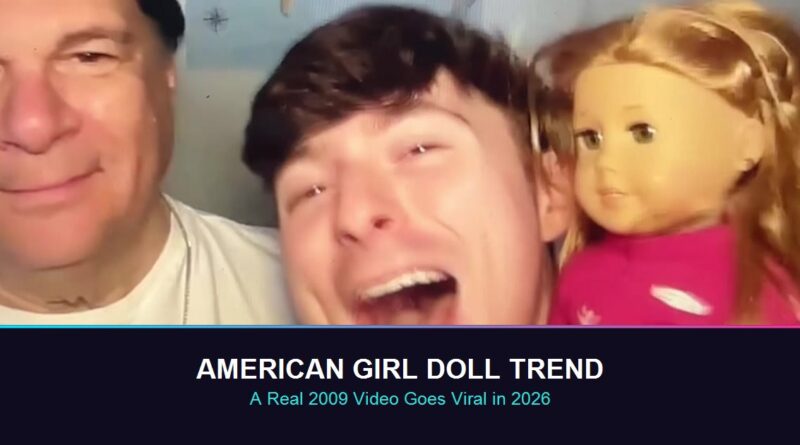
Hero image: real screen grab from Angelo David’s (@itsangelodavid) original 2009 home video, the source clip behind TikTok’s American Girl Doll trend. This is copyrighted third-party video content used under standard editorial commentary practice, credited here, not royalty-free.
The American Girl Doll trend taking over TikTok right now didn’t start with a creator trying to go viral. It started with a real home video from 2009, recovered off someone’s dad’s computer, of a kid introducing his American Girl doll like she was the single greatest thing that had ever happened to him.
Seventeen years later, that unfiltered scream of joy is the exact reason the American Girl Doll trend works. Creators are borrowing it wholesale to reveal their own grown-up “prized possessions,” and the gap between a kid’s genuine excitement and an adult’s mundane brag is the entire joke.
What to know
- The American Girl Doll trend runs on a real 2009 home video posted by creator Angelo David (@itsangelodavid), showing him as a kid introducing his doll, Mia.
- The original clip sits at 638.3K likes and 570 comments as of the most recent independent check, tagged simply #oldvideo #2009.
- The exact line, confirmed directly against the video’s own on-screen caption text: “My American Girl doll Mia, woahhh, I just got her like two weeks ago.”
- Other creators reuse the clip and its audio to reveal an adult version of a prized possession, from a package that just landed to a reunion with a close friend.
- It lands in the same September 2026 window as this site’s Ancestor Photo Prank trend coverage, another format built on real family/generational reaction dynamics, though the two work in opposite directions on honesty.
Table of Contents
What Is the American Girl Doll Trend?
The American Girl Doll trend is a reveal format. A creator opens with a reaction shot, lip-syncing the scream at the “woahhh” moment from the original 2009 audio, then cuts to a text overlay showing their own version of a prized possession.
That reveal is almost always something completely ordinary. Trend coverage from social analytics newsletter Social Trending Now describes the format as pairing childlike excitement with things like a favorite coffee order or a recent purchase someone has made their whole personality.
Marketing insights firm NewEngen, tracking September 2026’s biggest TikTok formats, puts the American Girl Doll trend alongside what it calls “audio revivals and reveal gags.” The wider the gap between the excited setup and the boring payoff, the better the joke lands.
Unlike a lot of TikTok trends, the American Girl Doll trend wasn’t manufactured by a creator trying to seed a format. It exists because one specific home video got recovered, reposted, and noticed.
@itsangelodavid ♬ original sound – Angelo David
That’s the actual source video, embedded directly, verified through TikTok’s own oEmbed API before it went anywhere near this article.
The Real 2009 Video Behind the American Girl Doll Trend
The creator behind the American Girl Doll trend is Angelo David, who posts on TikTok as @itsangelodavid. The clip driving the whole trend is a genuine 2009 recording, tagged simply #oldvideo #2009, showing him as a kid sitting with his dad in front of a laptop, holding an American Girl doll named Mia.
The framing matters here. This isn’t a recreation or a bit shot to look old. It’s an actual file that sat on a family computer for years before someone thought to pull it back out and post it.
The exact line, checked directly against the on-screen caption text baked into the video itself rather than a secondhand paraphrase, is: “My American Girl doll Mia, woahhh, I just got her like two weeks ago.” That “like” is real kid filler speech, not a polished catchphrase, which is part of why it reads as genuine rather than performed.
As of the most recent independent check, the original American Girl Doll trend video sits at 638.3K likes and 570 comments. Those numbers can climb as the trend keeps circulating, since TikTok’s own engagement counts update continuously and aren’t something a static citation can freeze in place.
Angelo David isn’t a one-video account, either. His TikTok is built around an ongoing “oldvideo” series, other posts tagged #oldvideo #2004, #oldvideo #2006, and #oldvideo #2010 all show up in the same body of work. The American Girl Doll clip is the one that broke out, but it’s part of a real, sustained bit: mining his own childhood footage for content, not a one-off stunt.
How Other Creators Are Remixing the American Girl Doll Trend
Once a clip like this starts moving, TikTok users don’t all use it the same way. Two real, independently oEmbed-verified examples show two different directions the American Girl Doll trend has actually taken, not just the clean “reveal gag” version described in trend roundups.
The first is a repost from creator @jackieunicorn676, using the same original footage with an added caption: “When I say ‘MY AMERICAN GIRL DOLL MIA WOAHHH I just got her like two weeks ago’ but no one gets the reference.” Rather than doing an original reveal, this post is commenting on the trend itself, joking about how many people are lip-syncing or repeating the line without knowing where it actually came from.
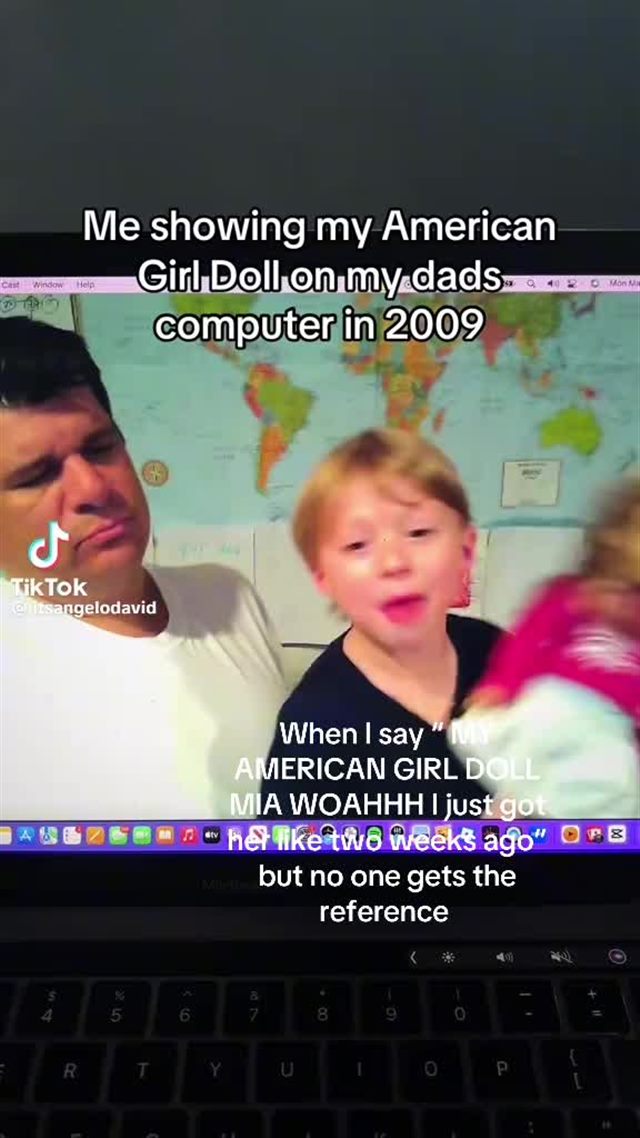
That “no one gets the reference” joke is itself a real, useful signal about where the American Girl Doll trend actually stands. Plenty of the audio’s spread is happening through people who’ve heard the line without ever seeing, or knowing about, the original clip it came from.
The second example moves the trend somewhere more sincere. Creator @ariana.gj_ posted a clip captioned simply “reunited,” using Angelo David’s original sound, showing two friends reacting with arms-up excitement.
@ariana.gj_ reunited
♬ original sound – Angelo David
That’s not a package or a diploma, it’s a person. The “prized possession” being revealed is a friend they clearly hadn’t seen in a while, which stretches the American Girl Doll trend’s format past objects entirely into real relationships, still carrying the same “this is my whole personality right now” energy the original video had about a doll.
Between a meta-commentary repost and a genuine friend reunion, the American Girl Doll trend is already splitting into more than one lane less than a month after it started circulating, which is usually a sign a format has real staying power rather than a single flash of virality.
Why This 17-Year-Old Clip Is Hitting Right Now
Part of the American Girl Doll trend’s pull is generational math. Anyone who actually owned an American Girl doll during the brand’s original marketing push is now solidly an adult, old enough to find a stranger’s unfiltered childhood joy funny instead of embarrassing.
That audience overlap isn’t new to this specific trend. American Girl itself has been actively chasing TikTok relevance for years. Marketing Brew reported in December 2024 that the brand’s TikTok-specific engagement had grown 91% over the prior year, outpacing its 10% overall social growth, under a strategy company president Jamie Cygielman described as balancing “engagement, both off-channel engagement as well as leaning into some pop culture, and memes.”
Cygielman named the brand’s three real audiences directly: girls ages 3 to 10 who are current doll buyers, millennial mothers buying for their own kids, and Gen Z adults who grew out of the dolls themselves. The American Girl Doll trend’s actual audience, judging by who’s doing the reveals, sits squarely in that last group.
This isn’t the first wave of adults publicly re-embracing American Girl dolls, either. L’Officiel documented the brand’s earlier comeback among adults back in 2022, tying it to items like Swarovski and Stoney Clover Lane crossovers and a wave of grown women bringing dolls to brunch. The 2026 TikTok trend is a new, audio-driven expression of an appeal that’s been building for years, not a phenomenon appearing out of nowhere.
What makes the American Girl Doll trend distinct from that earlier wave is that it isn’t about the doll itself anymore. Mia is barely the point. The point is a real kid’s completely sincere, un-self-conscious excitement, at a moment before anyone has learned to perform a reaction for an audience.
Recovering that footage from “my dad’s computer” is doing real work in how the American Girl Doll trend lands, too. It signals the clip is unstaged home-movie material, not something shot for an audience, which is exactly what makes the mismatch with a curated adult reveal funny instead of mean.
Part of TikTok’s Bigger September Nostalgia Pattern
The American Girl Doll trend isn’t an isolated case of old footage suddenly mattering again. This site covered a related, though structurally opposite, format just a day earlier: the ancestor photo prank trend, where creators send parents and grandparents a fake sepia-toned “ancestor” photo, often a repurposed celebrity image, and film the sincere reaction before revealing the deception.
Both formats depend on the same real thing: an older relative’s or an audience’s willingness to take family history and childhood memory at face value. Both also lean on genuine, unguarded reactions rather than a performed bit as the actual payoff.
Where they split is honesty. The ancestor photo prank trend manufactures a fake moment using an AI portrait or a borrowed celebrity photo, then reveals the fabrication for the joke. The American Girl Doll trend does the opposite: everything in the original clip actually happened, in 2009, exactly as it looks. The comedy comes from an authentic old reaction being real, not from finding out it was fake.
Read side by side, the two trends say something real about where a chunk of September 2026 TikTok content is drawing its energy from: family archives, generational memory, and reactions nobody could fake if they tried, whether the “ancestor” in the clip is invented or the doll in someone’s arms is completely real.
The American Girl Doll trend also isn’t the only nostalgia wave TikTok has run through in 2026. Fast Company and Forbes both covered a much larger, named movement called “2026 is the new 2016,” which took off after TikTok user @taybrafang posted a montage of 2016 moments on December 31, 2025, and another user, @joebro909, proposed January 1, 2026, as a “reset day” for reviving mid-2010s internet culture.
That movement, nicknamed “the Great Meme Reset,” pulled back Snapchat puppy-dog filters, bottle-flip videos, and Zara Larsson’s “Lush Life” charting again, all built on the same basic mechanic driving the American Girl Doll trend: real, dated footage or artifacts resurfacing because an audience is actively hungry for something that predates the current internet, not because a brand engineered it.
The American Girl Doll trend’s own footage is even older, from 2009 rather than 2016, and it’s personal rather than collectively remembered internet culture. But it’s landing in a year where TikTok has already shown, more than once, that real, unpolished artifacts from the past can outperform anything designed to look nostalgic on purpose.
Quick Answers
Who started the American Girl Doll trend on TikTok?
Creator Angelo David (@itsangelodavid) posted the original clip, a real 2009 home video of himself as a kid introducing his American Girl doll, Mia.
What’s the exact American Girl Doll trend quote?
Checked directly against the video’s own on-screen caption: “My American Girl doll Mia, woahhh, I just got her like two weeks ago.”
Is the original American Girl Doll trend video actually real, or staged to look old?
It’s real. The video is a genuine 2009 recording, described as recovered from a family computer, not a modern recreation shot to look vintage.
Do you need an actual doll to do the American Girl Doll trend?
No. The format is a reveal gag: lip-sync the “woahhh” moment, then cut to your own grown-up “prized possession,” which can be anything from a package to a reunion with a friend, based on real examples of the trend in use.
How many likes does the original American Girl Doll trend video have?
638.3K likes and 570 comments as of the most recent independent check. TikTok engagement counts update continuously, so the number will likely be higher by the time this is read.