TikTok Addiction Lawsuits: A Pattern Emerges (2026)
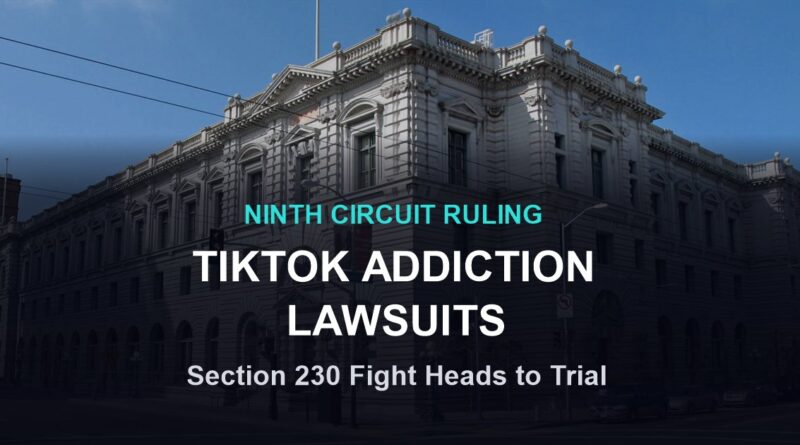
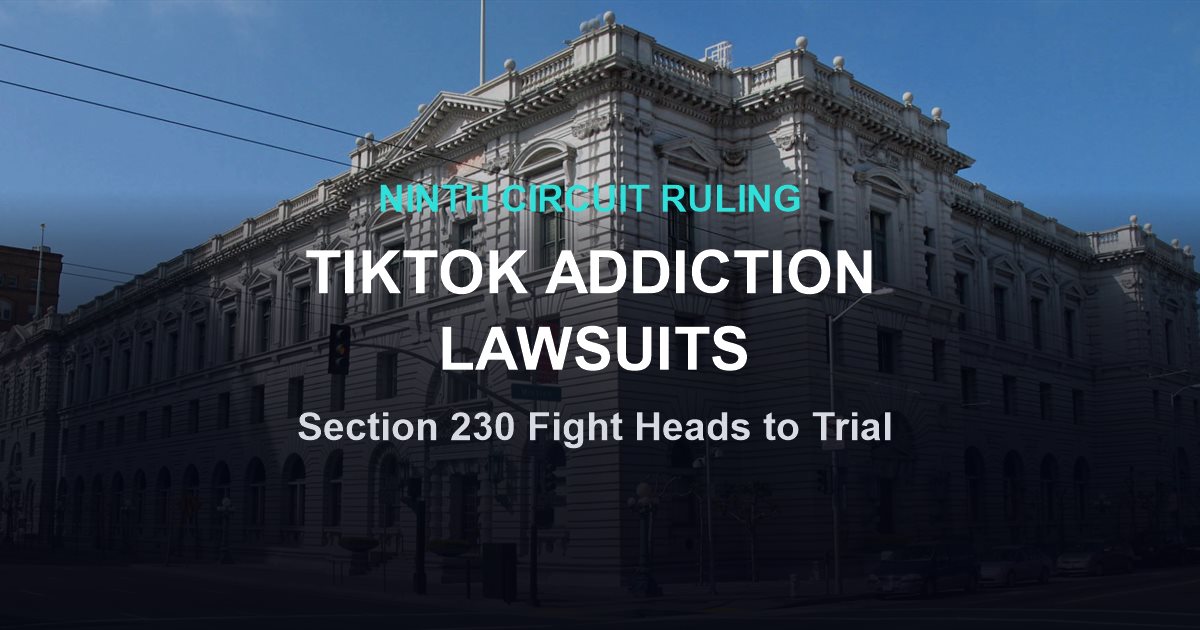
Credit: James R. Browning United States Courthouse, San Francisco, home to the U.S. Court of Appeals for the Ninth Circuit. Photo by Sanfranman59, Wikimedia Commons (CC BY-SA 4.0).
TikTok addiction lawsuits keep reaching the same door and stopping right in front of it. Five separate times in 2026, a case accusing TikTok of designing an addictive app for kids has gotten close enough to a jury that a trial date was actually set. Five times, TikTok settled first, confidentially, without admitting anything. Meta and Google did not have that same year. They went to trial once already, in front of a Los Angeles jury, and lost.
That contrast is the real story behind a Ninth Circuit ruling handed down Monday, August 10, 2026, one that cleared more than 3,000 lawsuits to keep moving toward trial. The ruling itself didn’t decide who’s right in TikTok addiction lawsuits or any of the other cases in this docket. What happens next to each company is where the actual difference shows up.
- What the court actually decided: the Ninth Circuit rejected Meta, Google, Snap, and TikTok’s attempt to appeal early, ruling Section 230 is “a defense to liability, not immunity from suit” – meaning the underlying question of whether Section 230 protects these companies still hasn’t been decided by any court
- The scale: more than 3,000 lawsuits are coordinated in California state court alone, on top of a separate federal case load reported at 2,400 to 3,137 lawsuits depending on the count and date, filed by families, school districts, and states
- The TikTok-specific pattern: TikTok has settled five individual plaintiff cases in 2026 (January, June, and three more in August) rather than let any of them reach a jury
- The contrast: Meta and Google went to trial in March 2026 and lost, a $6 million jury verdict; both are scheduled to face a jury again in October, along with Snap
- Not the same case: this is separate, private civil litigation over addictive design, distinct from TikTok’s $400 million COPPA settlement with the Justice Department over child data privacy
In this article
What the Ninth Circuit Actually Ruled
On Monday, August 10, 2026, the U.S. Court of Appeals for the Ninth Circuit rejected an early appeal from Meta, Google, Snap, and TikTok in the consolidated litigation over allegedly addictive app design aimed at minors. Circuit Judge Jacqueline Hong-Ngoc Nguyen wrote the opinion. On the core legal question the companies raised, she was direct: “Although Section 230 does not expressly provide for immunity from suit, Meta argues that such immunity should be implied. We disagree.”
It’s worth being precise about what that sentence does and doesn’t decide, since coverage of TikTok addiction lawsuits and the broader ruling this week has flattened it into “court rules against Big Tech” more than once. The Ninth Circuit didn’t rule that Section 230 fails to protect these companies from the underlying claims. It ruled on a narrower, procedural question: whether the companies could appeal a lower court’s refusal to dismiss the cases right now, before trial, the same way a government official can immediately appeal a denial of qualified immunity.
The court said no. Section 230, as the panel read it, functions as “a defense to liability, not immunity from suit” – meaning it’s the kind of protection a defendant argues at trial or on a full appeal after a final judgment, not a get-out-of-being-sued-at-all card that supports jumping the line for an early appeal. Under a legal principle called the collateral order doctrine, that distinction is what determines whether an appeals court even has jurisdiction to hear the appeal before the case is over. The Ninth Circuit found it didn’t.
The practical effect for TikTok addiction lawsuits, and for every other case in this litigation, is the same regardless of the legal nuance: the appeal is dismissed, the underlying cases proceed, and the actual merits of the Section 230 defense will get decided later, case by case, at trial or on appeal after a final verdict. The same day, the panel also declined to pause a separate trial, brought by a coalition of state attorneys general against Meta, that was set to begin within days in federal court in Oakland.
The Scale: More Than 3,000 TikTok Addiction Lawsuits and Counting
TikTok addiction lawsuits aren’t a handful of test cases. They’re part of one of the largest consolidated product liability efforts in the country right now, and it runs on two separate tracks at once, which is part of why coverage of the total case count varies by outlet.
The federal track is a multidistrict litigation (MDL) proceeding before Judge Yvonne Gonzalez Rogers in the Northern District of California, in Oakland. Depending on the outlet and the exact date of the count, that docket has been reported at anywhere from roughly 2,400 to more than 3,100 individual cases.
Separately, California state courts are coordinating their own docket, reported at more than 3,000 cases on its own, through a Judicial Council Coordination Proceeding in Los Angeles County Superior Court, before Judge Carolyn B. Kuhl. No single source checked for this piece gives one combined number across both tracks, so this article reports them as the two separate figures they actually are rather than adding them into a round total nobody has actually confirmed.
The plaintiffs across both tracks include individual families, school districts, and state governments, all alleging some version of the same core claim: that these platforms were deliberately engineered with features like infinite scroll, autoplay, and algorithmic recommendation to maximize engagement among minors, at a cost to their mental health. TikTok addiction lawsuits make up a real share of that combined docket, alongside the identical claims filed against Meta, Google, and Snap.
Timeline: Five Settlements, Zero Trials
The individual-plaintiff side of this litigation runs through a series of “bellwether” cases, early test trials meant to help everyone gauge what larger settlements or verdicts might eventually look like across the full docket. Here’s how TikTok addiction lawsuits have actually played out on that track, case by case, against the record Meta and Google built in the same cases.
January 2026 – The first bellwether in the TikTok addiction lawsuits, K.G.M. v. Meta et al.
Snap settled with the lead plaintiff, a young woman identified in court filings as K.G.M., on January 20, 2026. TikTok settled with her separately about a week later, on January 27, both companies reaching confidential agreements without admitting liability, both in the days just before jury selection began.
March 25, 2026 – The verdict Meta and Google didn’t avoid
With TikTok and Snap already out of the case, a Los Angeles County Superior Court jury found Meta and Google liable, awarding K.G.M. $6 million total: $3 million in compensatory damages, split 70% to Meta and 30% to Google, plus another $3 million in punitive damages. It was the first completed jury verdict in the entire nationwide litigation. Meta has appealed.
May 21, 2026 – A different track, but the same instinct
Meta, Snap, TikTok, and Google/YouTube jointly settled a Kentucky school district’s case (Breathitt County) for a combined $27 million, just weeks before that case was set for its own bellwether trial. This one is worth flagging because Meta settled here too, alongside everyone else, which matters for how the TikTok addiction lawsuits story gets framed further down.
June-July 2026 – The second individual bellwether, R.K.C.
Google settled with the second bellwether plaintiff, a Florida teen identified as R.K.C., ahead of a trial that had been set for July 27. TikTok reached its own settlement with R.K.C. around June 30. Snap settled with him too, around July 20-21. Facing a trial alone against only Meta, R.K.C. dropped his remaining claim on July 22, 2026, rather than proceed as the sole plaintiff. No jury ever heard that case.
August 4, 2026 – Three more, ahead of October
In the latest round of TikTok addiction lawsuits to settle, TikTok reached agreements in principle to resolve claims from three more plaintiffs headed toward the next round of bellwether trials: S.J., a 15-year-old from Illinois; P.M.Y., a 15-year-old from New Jersey; and K.D.B., an 18-year-old from Mississippi.
Attorneys Joseph VanZandt of Beasley Allen and Emily Jeffcott of Morgan & Morgan, representing the plaintiffs, confirmed the settlements were reached “subject to the finalization of a written settlement agreement.” As with every other settlement across TikTok’s addiction lawsuits this year, no dollar amount was disclosed.
August 10, 2026 – The Ninth Circuit ruling
The appeal covered above is rejected. More than 3,000 lawsuits, including thousands of TikTok addiction lawsuits still working through both dockets, remain cleared to proceed toward trial – even the three specific cases TikTok had just settled its way out of six days earlier.
August 26, 2026 – Meta settles a different case entirely
Mid-trial in Oakland, Meta agreed to pay up to $17 billion over time to settle a lawsuit brought by a coalition of state attorneys general, ending that specific trial before a verdict. This is a separate case from the individual bellwether track that defines TikTok addiction lawsuits’ real distinction, brought by state governments rather than individual families, but it’s real evidence that Meta’s own relationship to trial isn’t absolute either.
The TikTok Addiction Lawsuits Pattern Nobody Else Matches
Lay that timeline out and one thing stands out about TikTok addiction lawsuits specifically: on the individual-plaintiff bellwether track, TikTok has now settled with every single named plaintiff whose case got close enough to a real trial date in 2026. That’s five separate cases, five separate settlements, zero times in front of a jury.
Meta and Google share the opposite record on that same track. They went to trial once, in March, and a jury found them both liable. They’re scheduled to do it again in October, this time alongside Snap, defending against the same three plaintiffs TikTok already settled with.
None of the sources checked for this piece offer an on-record explanation from TikTok, Meta, or the plaintiffs’ attorneys for why this specific split has happened. TikTok did not respond to requests for comment in the coverage reviewed here, and neither did Meta. That’s a real gap, not a detail this article is willing to fill in with a guess: it’s genuinely unclear from public reporting whether TikTok is settling because of case-specific factors in each plaintiff’s claims, a broader risk calculation about its legal exposure, or something else entirely. What’s verifiable is the pattern itself, not the reasoning behind it.
The Complication: Meta Has Settled Too
A clean “TikTok addiction lawsuits always settle, Meta always fights” storyline doesn’t survive contact with the full record, and it’s worth saying so directly rather than only including the parts that make the contrast sharper.
Meta settled the Kentucky school district case in May, alongside TikTok, Snap, and Google. Meta also agreed to pay up to $17 billion to end the state attorneys general trial in August, mid-proceeding, rather than let a judge rule against it. That’s a real, large settlement, on a different but related legal track.
What’s specific to TikTok addiction lawsuits is narrower and still real: on the one track built specifically to test how individual families’ personal injury claims hold up in front of an actual jury, TikTok has never once let a case get there. Meta and Google have, and lost. Snap has mostly settled on that track too, but is still on the docket for October’s trial, unlike TikTok, which has already settled its way off it entirely.
Not the Same Case as the $400 Million Settlement
It’s easy to mentally merge this with TikTok’s other big 2026 legal story, so it’s worth separating them clearly. Earlier this year, TikTok agreed to pay $400 million to settle a Justice Department lawsuit over children’s privacy violations under COPPA, letting kids under 13 hold accounts and mishandling data from its own “Kids Mode.”
That was a federal government enforcement action, brought by the DOJ on behalf of the public, over a specific privacy statute. TikTok addiction lawsuits, by contrast, are a completely different legal animal: private civil litigation brought by individual families, school districts, and state governments, arguing product-design negligence rather than a privacy-law violation. Both are real, both are about protecting minors on the platform, and both happened to resolve in 2026, but they’re legally unrelated tracks with different plaintiffs, different courts, and different underlying claims. Settling the COPPA case says nothing about how TikTok addiction lawsuits will ultimately resolve, and vice versa.
What Happens in October
Judge Kuhl’s courtroom is scheduled to hold the next round of individual bellwether trials in Los Angeles County Superior Court starting in October 2026, covering the claims brought by S.J., P.M.Y., and K.D.B. – the same three cases that, until August 4, counted among the pending TikTok addiction lawsuits. Meta, Google/YouTube, and Snap are still named defendants in those cases. TikTok is not.
Whatever a jury decides in October will land on top of the March verdict as the second real data point on how this specific type of claim performs in front of real jurors, information that matters to every one of the more than 3,000 remaining cases still working through both the federal and state dockets. TikTok addiction lawsuits will keep generating that same data too, just from a different source: whatever confidential terms it keeps agreeing to, rather than whatever a jury decides.
Quick answers
Did the Ninth Circuit rule that Section 230 doesn’t protect TikTok, Meta, Google, and Snap? No. It ruled that the companies couldn’t immediately appeal a lower court’s refusal to dismiss the cases before trial, because Section 230 is a defense to liability, not immunity from being sued at all. Whether Section 230 ultimately protects any of these companies is still undecided.
How many TikTok addiction lawsuits are there? TikTok is one of several named defendants across a docket reported at more than 3,000 cases coordinated in California state court, plus a separate federal case load reported between roughly 2,400 and 3,100-plus, depending on the source and date.
Has TikTok settled every one of the TikTok addiction lawsuits against it? No. It has settled with five individual plaintiffs whose bellwether cases neared trial in 2026. Thousands of other cases in the broader litigation remain unresolved and haven’t reached that stage yet.
How much has TikTok paid to settle these cases? Unknown. Every settlement TikTok has reached in this litigation has been confidential, with no dollar figures made public in any case reviewed for this article.
Is this related to TikTok’s $400 million settlement with the DOJ? No. That was a federal government enforcement case over children’s privacy law (COPPA). This is separate private civil litigation over app design, brought by families, school districts, and states.
Sources on the Ninth Circuit ruling and its scope: CBS News, Axios, and Fox Business.
Sources on TikTok’s individual settlements: NBC News, TechCrunch, and Claims Journal.
Sources on the Kentucky school district and Meta’s state settlement: Engadget and NPR. Total case count sourced to the Business and Human Rights Resource Centre.