Great Lock-In Trend 2026: TikTok’s Incredible, Ultimate Reset
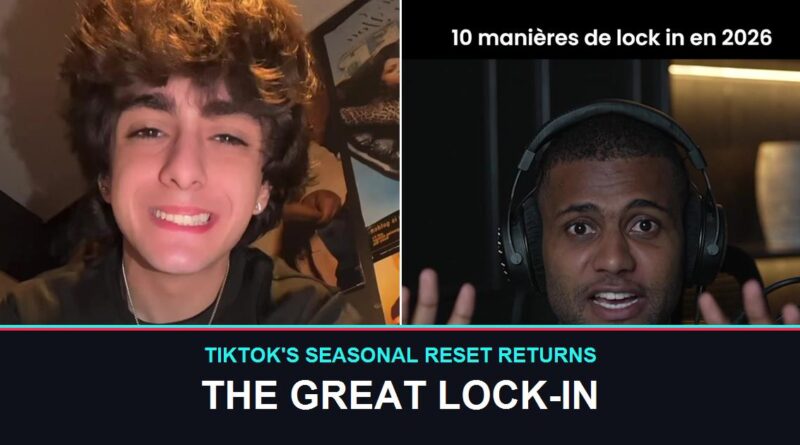
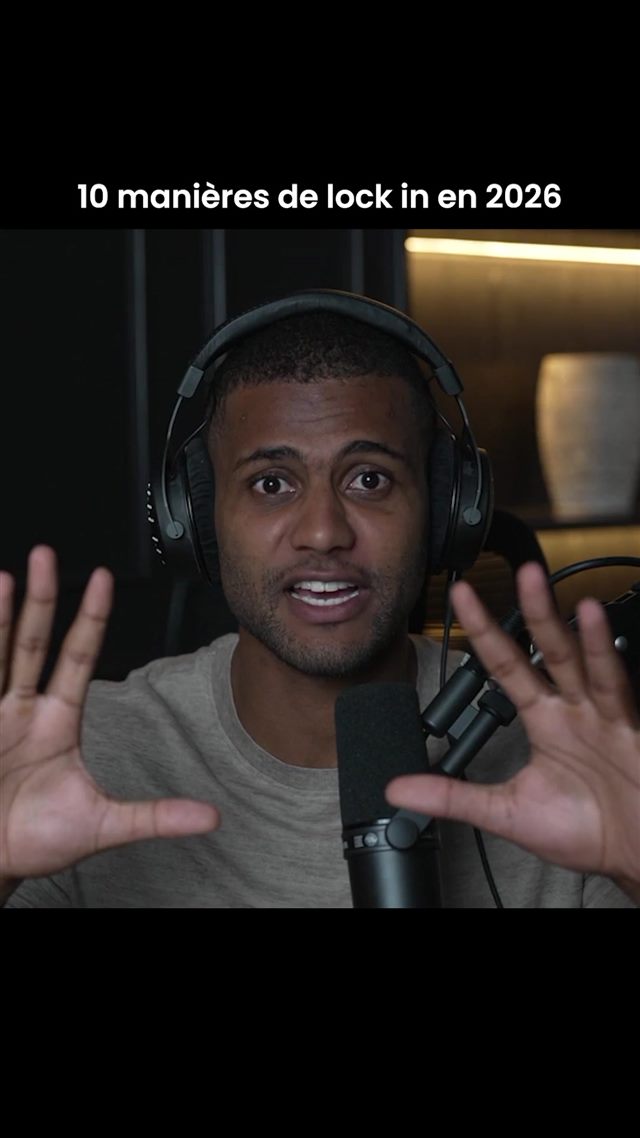
Credit: hero image built from real, oEmbed-verified screen grabs of two Great Lock-In trend videos, @ardalamarr and @yomidenzel on TikTok. The in-content photo further down is a separate frame from the @yomidenzel video.
Every September, a chunk of TikTok decides the year isn’t over yet. This year’s version of that decision has a name: the Great Lock-In. Creators are picking two or three habits (a gym schedule, a savings goal, an earlier bedtime) and committing to them from September 1 through December 31, so they start 2027 with routines already built instead of waiting for a January reset that rarely survives past week three.
That much is true every year the phrase has existed, and that’s the actual story here. The Great Lock-In isn’t new in 2026. It’s TikTok’s second confirmed run of a specific branded trend that itself repackaged an older one, and this year’s wave is genuinely different from last year’s in one real, verifiable way: it’s traded a pure fitness focus for something broader.
What to Know
- The Great Lock-In (also called the September Lock-In) runs September 1 to December 31, with people committing to self-improvement routines instead of waiting for New Year’s resolutions.
- Press coverage of “the Great Lock-In” by this exact name first appeared in September 2025, not 2026. Newsweek, Betches, Fortune, Gymshark, Pedestrian.tv, RELEVANT, and Hello Magazine all covered it within the same nine-day window (September 2-11, 2025).
- Betches’ own coverage directly calls the Great Lock-In “essentially a repackaged version of last year’s ‘winter arc’ trend,” which traces back further still, to a phrase Know Your Meme dates to a September 2022 Urban Dictionary entry.
- Buzzfeed’s September 7, 2026 coverage frames this year’s wave as the trend “taking over TikTok again,” with 2026’s version described as more holistic than prior years, adding mindfulness and mental wellbeing to what used to be an almost entirely fitness-focused format.
- Two real, current 2026 videos verified for this piece show how differently people are actually approaching it: one is a straightforward list of ways to “lock in” for the year ahead, the other leans into gym-bro self-parody.
In this article
What Is the Great Lock-In Trend?
“Lock in” is UK slang for hyperfocusing on something, cutting out whatever’s distracting you until the task in front of you gets done. TikTok’s Great Lock-In borrows that phrase and applies it to the last four months of the calendar. Instead of one big New Year’s resolution made on January 1 and usually abandoned by February, participants pick a small number of specific habits, typically two to five, and hold themselves to them from September 1 through December 31.
There’s no official rulebook and no single founder. People build their own version: a fitness target, a savings goal, an earlier bedtime, a screen-time limit, a plan to read more or scroll less. The pitch is consistent across nearly every video on the topic: roll into next year with the habit already built, instead of starting from zero on a random Wednesday in January.
This Isn’t TikTok’s First Year-End Reset Trend
This is the part most coverage of the Great Lock-In skips, and it’s the actual story worth telling. The idea of using the last stretch of the year to “lock in” a routine before winter, rather than waiting for January, didn’t start with this trend or this name.
According to Know Your Meme’s tracking of the phrase, “winter arc” traces back to a September 1, 2022 Urban Dictionary entry defining it as a time “every man must face the mental and physical challenges of winter.” Twitter users were posting about entering their own “winter arcs” by mid-October 2022, and TikToker @nickpedersen__ posted one of the platform’s earliest notable winter arc videos that December, a clip Know Your Meme credits with more than 3 million plays.
The phrase spread through 2023, then hit real mainstream virality in 2024. Know Your Meme points to creator @noahlifts5’s dramatic head-shaving winter arc video, reported at more than 25 million plays, as the moment the trend became impossible to miss.
That’s a real, dated precedent for exactly the pattern now playing out under a different name. This site has tracked the same shape before with a completely different kind of trend, a joke that drifts, gets declared dead, and keeps coming back anyway: the six-seven trend followed almost the same arc, just on a meme timeline instead of a wellness one.
Seasonal self-improvement trends and meme trends don’t usually get compared to each other. But the underlying mechanic, a format that outlives its own “this is over” moment, is the same one.
How the Great Lock-In Actually Started, in 2025
The specific phrase “the Great Lock-In” isn’t a 2026 invention either. Newsweek covered it under the name “September Lock-In” on September 3, 2025, describing a trend that had begun two days earlier and already had real traction. TikTok creator Kadie Glenn’s video explaining the format had passed 800,000 views by the time Newsweek wrote it up, and clinical psychologist Shauna Shapiro told the outlet the trend “reflects young people’s desire for structure, focus, and personal growth.”
Within the same nine-day window, the trend picked up coverage from Betches, Fortune, Gymshark’s own blog, Pedestrian.tv, RELEVANT Magazine, and Hello Magazine, all publishing between September 2 and September 11, 2025. Hello Magazine’s writeup pointed to TikToker Tatiana Forbes’ video, which had racked up 767,000 views, 129,900 likes, and 27,600 saves describing the Lock-In as “more than enough time to absolutely change your life.”
Betches is the outlet that draws the direct line back to winter arc explicitly, calling the Great Lock-In “essentially a repackaged version of last year’s ‘winter arc’ trend,” the same 2024 wave described above. Clinical psychologist Jamie Evan Bichelman told the outlet that “as we make our way through the ‘ber’ months, the crushing pressure of wanting to conclude the year on a high note may make us feel the need to fit a year’s worth of accomplishments into a few short months.”
Psychologist Dr. Meghan Marcum added a second, complementary read: “the combination of deadlines, reflection, and social momentum tends to sharpen people’s attention on goals.”
Gymshark’s own coverage from that same week, credited to hybrid athlete and CrossFit coach Alex Kirkup-Lee, leaned into concrete, numbers-based goals: strict and butterfly pull-up work twice a week, building toward a specific barbell snatch target by December. Gymshark’s piece also cited University College London research finding it takes an average of 66 days to form a new habit, with a real range of 18 to 254 days depending on the behavior, which is part of why a four-month window gets pitched as long enough to matter.
One small, honest detail worth flagging: Gymshark’s original blog post is still live under a URL and byline dated September 2025, yet its current text now references “the Great Lock-In of 2026.” That’s not a sign the trend is somehow fake or backdated, it’s just a publisher updating an evergreen page rather than writing a fresh one, and it’s a real, first-hand example of exactly how blurry these year-over-year trend rebrands get once outlets start refreshing old coverage instead of dating it clearly.
What’s Actually Different About the 2026 Wave
So the honest framing is: this is year two (at minimum) of a named trend that is itself a rebrand of an older one. That doesn’t mean nothing changed. Buzzfeed’s September 7, 2026 coverage is the clearest primary source for what’s genuinely different this time, because it directly compares the two years rather than treating 2026 as a standalone story.
Per Buzzfeed, “previous years were seemingly focused solely on the fitness side of the lock-in,” while “2026’s version appears to be a little more holistic, with mindfulness and mental wellbeing joining the mix.” The framing has also shifted forward a year, naturally: 2025’s wave was pitched as a head start on 2026, and 2026’s wave is now pitched as a head start on 2027.
Buzzfeed’s piece features creators publishing new lock-in content this cycle, including @charrlottepratt, who told followers “it’s time to become really intentional about your goals, your routines, your habits,” alongside @effortlyse and @wellnessmae, both framing the same September 1 start date around habits well outside the gym: sleep, screen time, journaling, and finances alongside fitness.
That broadening is also the one place where “winter arc” and “the Great Lock-In” now genuinely diverge as concepts rather than just names. Winter arc, in its original and still-common usage, is specifically about getting through the darker, colder months with fitness-driven structure. The Great Lock-In, at least in its 2026 form, has stretched to cover finances, career goals, and mental health too, which is a real, describable difference and not just marketing language repeated from last year’s posts.
What Real 2026 Lock-In Videos Actually Look Like
Trend write-ups tend to describe a handful of hand-picked, sincere examples. What’s actually on TikTok under “lock in 2026” right now is a wider mix than that, and both real videos verified for this piece show a genuine range rather than a single tone.
French creator Yomi Denzel, a business and productivity-focused account, posted a straightforward list format: “10 manières de lock in en 2026,” ten concrete ways to lock in for the year ahead, delivered directly to camera in a podcast-style setup. It’s the closest thing among the videos found for this piece to the sincere, structured advice format most press coverage describes.
@yomidenzel 10 manières de lock in en 2026
♬ son original – Yomi Denzel
The second real example is a different animal entirely. Creator @ardalamarr posted a video captioned “LOCK IN 2026” over on-screen text reading “average straight guy gym motivation video,” tagged #gymmotivation. Rather than sincere advice, it leans into a self-aware joke about the gym-motivation genre itself, the kind of content that pokes fun at how formulaic “lock in” fitness posts have become.
@ardalamarr LOCK IN 2026 #gymmotivation #straightmen
♬ original sound – abdul-Rafay – abdul Rafay
That gap between the two is worth sitting with. A trend big enough to spawn its own parody, running alongside completely sincere versions of itself at the same time, is a real sign of reach that a handful of curated “here’s a nice example” screenshots wouldn’t show on their own.
Why the Habit Actually Sticks, According to Research
Fitness coach James Rodgers, quoted by RELEVANT Magazine, credits part of the Great Lock-In’s appeal to how measurable it is. Rules like “10,000 steps daily” or “no screens one hour before bed” give people something concrete to track, rather than a vague resolution like “get healthier.”
Dr. Suzanne Wylie, speaking to Buzzfeed about the 2026 wave specifically, framed the same idea around sustainability rather than intensity: “motivation tends to be much more sustainable when the focus is on consistency rather than perfection.” That’s a meaningfully different pitch than “change your entire life in four months,” even when the marketing copy around the trend still leans on that bigger promise.
The four-month window itself lines up reasonably well with actual habit-formation research. The University College London figures cited by Gymshark, an average of 66 days with a real range up to 254 depending on the behavior, mean a September 1 start gives most participants enough runway to make at least a simpler habit stick before the year is out, even if a harder one realistically won’t be automatic by December 31.
The Real Risk Experts Keep Flagging
Every wave of this trend has come with the same caution attached, not just from one skeptical outlet but consistently across the coverage. Registered clinical counselor Nilou Esmaeilpour told RELEVANT Magazine that overly rigid rules, her example was a commitment to exercise twice a day, “can lead to physical exhaustion, stress, or even fear” when someone inevitably can’t keep pace with their own plan.
Bichelman’s “ber months” pressure point from the 2025 coverage applies just as directly to 2026: trying to compress a year’s worth of self-improvement into four months can create exactly the all-or-nothing mindset the trend’s own fans say they’re trying to escape from January resolutions in the first place.
None of that makes the Great Lock-In uniquely risky compared to any other structured self-improvement plan. But the pattern across two years of coverage is consistent enough to take seriously: the version of this trend that works is the one built around Rodgers’ and Wylie’s advice, small, specific, sustainable habits, not the version chasing a total personal transformation in four months flat.
Quick Answers
Is the Great Lock-In trend new in 2026?
No. Press coverage of it by this exact name dates to September 2025, and Betches has directly described it as a repackaged version of the “winter arc” trend that went viral a year earlier, in 2024.
What dates does the Great Lock-In cover?
September 1 through December 31, roughly four months, framed as a head start on the following year’s goals rather than waiting for a January 1 resolution.
What’s different about the 2026 version?
Per Buzzfeed’s September 7, 2026 coverage, prior years focused almost entirely on fitness. The 2026 wave has broadened to include mindfulness, mental wellbeing, finances, and career goals alongside workouts.
Where does the “winter arc” trend it’s based on come from?
Know Your Meme traces the phrase to a September 2022 Urban Dictionary entry, with the trend reaching real mainstream virality on TikTok in 2024 via creator @noahlifts5’s head-shaving video.
Do experts think the Great Lock-In is a healthy trend?
With caveats. Multiple experts quoted across 2025 and 2026 coverage, including clinical counselor Nilou Esmaeilpour and psychologist Jamie Evan Bichelman, warn that rigid, all-or-nothing versions of the trend can backfire into exhaustion or guilt, while framing it around small, consistent, trackable habits is where the actual psychological upside sits.