
The Wabi-Sabi Trend: TikTok’s King of the Hill Meme, Explained (2026)
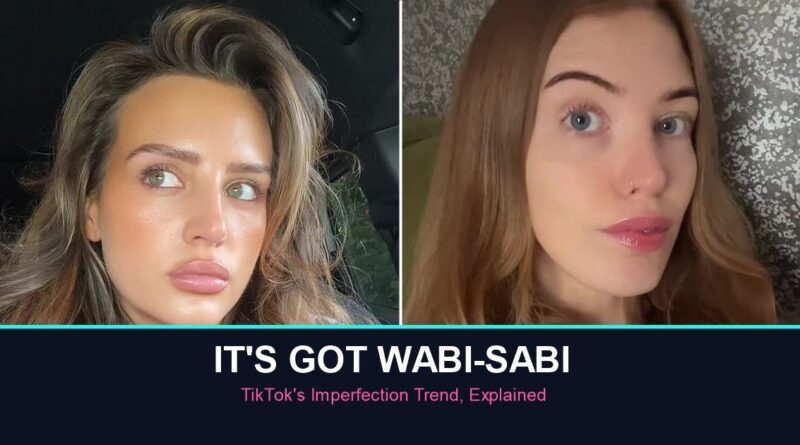
Credit: hero image built from real, oEmbed-verified screen grabs of two wabi-sabi trend videos, @maisabellaa and @ellegibsonn on TikTok. The in-content photo further down is from @carysofficial (Aviva Mongillo) on TikTok.
The wabi-sabi trend has taken over a specific corner of TikTok: people filming themselves pointing at a gap in their teeth, a scar, a crooked nose, or some other feature they used to hide, and calling it beautiful. The audio underneath almost all of it comes from an unlikely place, a 2002 episode of King of the Hill. Nearly a year after that clip first got repurposed for a basketball highlight reel, the wabi-sabi trend is still finding new life on the platform, even after plenty of people had already written it off as ruined.
What to Know
- The wabi-sabi trend’s audio comes from King of the Hill Season 7, Episode 6, “The Son Also Roses” (aired December 8, 2002), where Bobby Hill explains why he likes his rose “a little off-center.”
- The clip first went viral as the intro to a Kyrie Irving basketball edit posted October 18, 2025, according to Know Your Meme’s tracking of the meme’s spread, and the isolated audio is now credited on TikTok’s own sound page to a creator called LUX.
- A TikTok creator Know Your Meme identifies as “@p3rsussy” repurposed that same audio in November 2025 to show off her teeth, and Know Your Meme reports the sound was reused more than 100,000 times in the week that followed.
- Real videos verified for this piece show creators applying “wabi-sabi” to overbites, gaps, and other features they’d normally hide behind a filter.
- The wabi-sabi trend drew real backlash for becoming an overused buzzword within its first month, but outlets were still publishing fresh coverage of it as of late August 2026, nearly a year after it started.
In this article
What Is Wabi-Sabi, and Why Is TikTok Saying It?
Wabi-sabi is a real, centuries-old Japanese aesthetic philosophy, not something TikTok invented. “Wabi” roughly translates to a subdued, austere kind of beauty, and “sabi” refers to the rustic patina that comes from age and wear. Put together, the concept is usually summarized in English as an appreciation for things that are imperfect, impermanent, and incomplete.
The idea traces back to Zen Buddhist teachings on impermanence, and its association with Japanese tea culture is credited to two specific historical figures: the Zen priest Murata Jukō, who began swapping ornate Chinese tea instruments for simple wooden and clay ones in the 15th century, and the tea master Sen no Rikyū, who later popularized the aesthetic among Japanese nobility through minimalist teahouse design.
The wabi-sabi trend on TikTok compresses all of that into something much narrower: a compliment for a specific physical feature someone might normally hide. That’s a real simplification of the actual philosophy, and outlets covering the wabi-sabi trend have said as much. But a Japanese concept getting flattened into a TikTok sound is basically the deal every time a piece of centuries-old philosophy meets a 15-second audio clip.
The King of the Hill Scene That Started It All
The wabi-sabi trend’s audio comes from a single scene in “The Son Also Roses,” the sixth episode of King of the Hill‘s seventh season, which aired December 8, 2002, nearly a decade before TikTok existed. The episode centers on a rose-growing contest between Hank Hill and his son Bobby.
Bobby’s rose grows slightly off-center, and instead of seeing that as a flaw, he embraces it. “But I like how mine’s a little off-center. It’s got wabi-sabi,” Bobby tells his dad. When Hank doesn’t follow, Bobby explains further: “Wabi-sabi is an Eastern tradition, Dad. It’s celebrating the beauty in what’s flawed. Like the crack in the Liberty Bell or the mole on Cindy Crawford’s face.”
That handful of lines, delivered by a 13-year-old cartoon character more than two decades ago, is the entire source material for a trend that has now been reused hundreds of thousands of times. It’s a strange kind of longevity for a joke that wasn’t written with virality in mind at all, just a sitcom episode about a father and son arguing over roses.
From a Kyrie Irving Edit to a Body-Positivity Sound
The wabi-sabi trend didn’t start as a self-acceptance movement. According to Know Your Meme’s tracking of the meme’s spread, the King of the Hill clip was first reposted on TikTok as the intro to an NBA highlight edit for Kyrie Irving, credited to the account @footy.io0, on October 18, 2025. That edit reportedly pulled in more than 3.1 million likes within a month, the kind of number that gets a sound noticed by everyone else making similar edits.
The isolated audio clip that actually spread from there, the one that shows up as “original sound” on TikTok’s own sound page, is credited to a creator called LUX. That credit isn’t secondhand: it shows up directly in TikTok’s own oEmbed data on every wabi-sabi trend video checked for this article, months apart and from completely unrelated creators, which is about as close to a primary-source confirmation as a TikTok sound credit gets.
The pivot from sports edit to self-acceptance trend happened in November 2025, when a TikTok creator Know Your Meme identifies as “@p3rsussy” used the same audio to show off her teeth. That creator’s video is widely credited across multiple outlets, including Know Your Meme, as the tipping point that turned “wabi-sabi” from a basketball-edit intro into a body-positivity trend. Know Your Meme reports the sound was used more than 100,000 times in the week after the video posted. This piece could not independently verify that video through TikTok’s oEmbed system, and a direct check of the current @p3rsussy account did not clearly match the video or creator Know Your Meme describes, so this section rests entirely on Know Your Meme’s outside reporting rather than a direct, current-day confirmation.
What People Are Actually Showing Off
What the wabi-sabi trend actually looks like, beyond the reporting about it, is people pointing a camera at their own face and naming the thing they used to be self-conscious about. TikToker @maisabellaa posted one real example under the caption “My teeth have wabi sabi,” adding that her teeth were “my biggest insecurity literally my whole life” and that she “have barely any photos of me smiling before the last few years.” She says it was actually getting complimented on the platform that changed her mind about them.
@maisabellaa My teeth have wabi sabi 🙂↔️🙂↔️🙂↔️ my biggest insecurity literally my whole life I have barely any photos of me smiling before the last few years 🥲🥲 it was actually on here when I got complimented on them and it made me start liking them 😭 #insecurities #teeth #wabisabi #fyp
♬ original sound – LUX
TikToker @ellegibsonn posted a simpler version of the same wabi-sabi trend format, captioned “but i like how my teeth aren’t perfect, they’ve got wabi-sabi,” with the same LUX-credited sound underneath. Neither video is staged or filtered. Both are just a person looking at the camera and naming a feature they’ve decided to stop hiding.
@ellegibsonn i 🩷 cute wonky teeth with character
♬ original sound – LUX
Teeth are the single most common subject of the wabi-sabi trend, but they’re not the only one. TikToker @carysofficial (the singer and actress Aviva Mongillo) posted her own entry built around an orthodontist’s exact words to her.
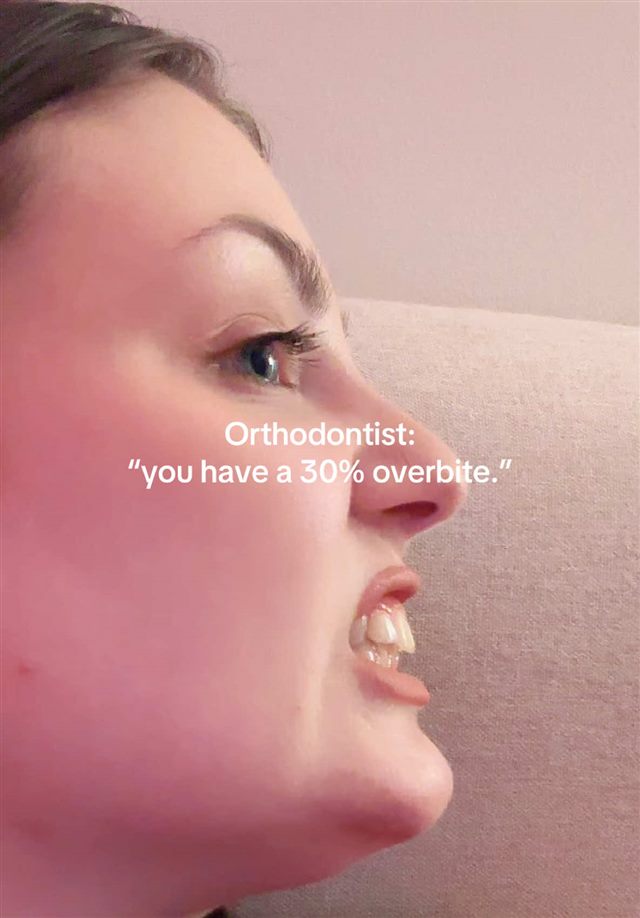
Beyond the three verified here, Pleated Jeans’ own August 2026 roundup of the wabi-sabi trend documented a much wider range: scars, vitiligo patches, stretch marks, missing teeth, strong noses, and birthmarks, on both people and their pets. The throughline across all of it is the same. These are exactly the features a beauty filter is built to erase, and the wabi-sabi trend exists specifically to point a camera at them instead.
It’s a strange kind of feature for a platform to reward, and not a total coincidence. This site has previously covered why TikTok’s own recommendation system tends to reward “average,” less-polished videos over highly produced ones. A trend built entirely around showing an unfiltered feature fits that same pattern of the platform rewarding the real over the polished, even if the wabi-sabi trend itself started for a completely different reason.
The Backlash Started Almost Immediately
The wabi-sabi trend didn’t get weeks of goodwill before people started mocking it. Daily Dot’s Susan LaMarca covered the backlash directly in a November 19, 2025 piece, less than a month after the “@p3rsussy” video Know Your Meme credits with kicking off the trend’s second life. Her reporting cites a parody video from creator @ynb_ha that pulled in 1.2 million views by mocking wabi-sabi callouts as “sneak disses and excuses.” One commenter she quotes put it more bluntly: “They ruined it so fast.”
Daily Dot also quotes creator @tweaktitanium describing how the phrase “became the new TikTok buzzword” and got “really annoying” once people started applying it to absolutely anything, not just genuine insecurities. Know Your Meme’s own coverage flags a related, less wholesome variant: instead of embracing their own wabi-sabi, some TikTok users have used the term to call out other people’s flaws instead, which is a very different move from the trend’s original spirit.
That’s the real tension sitting underneath the wabi-sabi trend. The format works precisely because it’s sincere, someone naming their own insecurity and refusing to hide it anymore. The same phrase, pointed at somebody else instead of yourself, isn’t the same trend at all. Both versions have existed on TikTok since practically the same week.
Nearly a Year Later, It’s Still Going
Plenty of TikTok trends that get declared “ruined” within a month are actually dead within a month. The wabi-sabi trend didn’t follow that pattern. Pleated Jeans published a fresh, 35-example roundup of wabi-sabi trend videos on August 30, 2026, more than nine months after the backlash Daily Dot had already documented back in November.
“TikTok has spent years handing out new insecurities like free samples at Costco, so it’s nice to see the app occasionally reverse course,” the Pleated Jeans piece reads. It closes on a similarly direct note: “It may not cover the philosophy’s full meaning, but I’ll gladly take a trend that makes people feel good about themselves for once.”
That’s a real, dated data point, not a guess about vibes. A publication running a brand-new roundup nearly a year after a trend’s original peak, well past the point most trend cycles have moved on twice over, is itself evidence of staying power. It’s the same basic shape this site tracked with the six-seven trend: a joke that started in one context, drifted into a completely different one, got written off as dead almost immediately, and kept going anyway.
One honest caveat is worth stating plainly. The specific wabi-sabi trend videos independently verified for this piece, including both embedded above, date to the original November 2025 wave rather than fresh September 2026 posts. What’s directly confirmed as current is the continued press coverage, the Pleated Jeans piece chief among it. Whether the volume of new video posts has genuinely spiked again this month, versus simply never fully stopped, isn’t something this piece can verify with the same rigor as the rest of its claims, and it says so rather than guessing.
Quick Answers
What does wabi-sabi actually mean?
It’s a Japanese aesthetic philosophy, rooted in Zen Buddhism and tea culture, that finds beauty in things that are imperfect, impermanent, and incomplete. TikTok’s wabi-sabi trend borrows the phrase but narrows it to a compliment for one physical feature.
Where does the wabi-sabi trend’s audio come from?
A scene from King of the Hill Season 7, Episode 6, “The Son Also Roses” (aired December 8, 2002), where Bobby Hill explains to his dad why he likes his off-center rose.
Who started the wabi-sabi trend on TikTok?
Per Know Your Meme, the clip was first reposted as the intro to a Kyrie Irving edit on October 18, 2025. A creator Know Your Meme identifies as “@p3rsussy” is credited with turning it into a self-acceptance format in November 2025 by using it to show off her teeth, though this site could not independently confirm that account or video.
Is the wabi-sabi trend still active in 2026?
Yes. Pleated Jeans published a new roundup of wabi-sabi trend videos on August 30, 2026, nearly a year after the trend’s original November 2025 peak, even though the format also drew real backlash for becoming an overused buzzword within its first weeks.