The Ancestor Photo Prank: TikTok’s Viral Family Trick (2026)
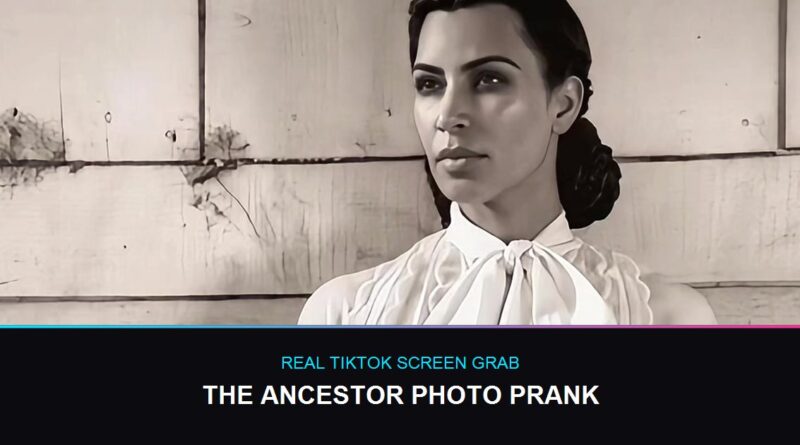
Credit: @kaia42052 and @rosalind4833/TikTok. Hero and in-content images are real screen grabs from each creator’s own posted video, linked above rather than embedded.
The ancestor photo prank is the TikTok trick currently getting parents and grandparents to believe in a relative who never existed. A creator texts an older family member a grainy, sepia-toned photo, says it turned up on an Ancestry.com search, and quietly films the reaction before revealing the photo is fake. Trend-tracking coverage has called it one of the defining TikTok formats of September 2026.
Here’s what the ancestor photo prank actually is, how creators pull it off, why the fake photos are convincing enough to fool people who know their own family history, and why this isn’t the first time TikTok has built a prank format around a parent’s trust in something they can’t tell is fake.
What to know
- The ancestor photo prank has a creator sending a parent or grandparent a fake vintage photo, claiming it’s a real ancestor discovered on Ancestry.com.
- The photo isn’t real. It’s usually either an AI-generated portrait built from the creator’s own selfie, or a repurposed real photo, most often cited as Kim Kardashian’s bow-blouse editorial shot, run through a black-and-white vintage filter.
- The comedy comes from how sincerely the family member reacts: studying the resemblance, naming the “relative,” sometimes asking to print the photo and frame it, before the prank is revealed.
- No single creator or moment has been identified as the trend’s actual origin, despite a direct search for one.
- Two earlier, well-documented TikTok trends, the “AI Homeless Man” prank and the 2022 celebrity death prank, followed the same basic shape: a younger creator uses a tool an older relative doesn’t recognize as fake, films the real reaction, then reveals it.
Table of Contents
What Is the Ancestor Photo Prank?
The ancestor photo prank runs on one text message. A creator sends a parent or grandparent an old-looking black-and-white photo of a stranger, with a caption along the lines of “found this on Ancestry, this is apparently your great-great-grandmother.”
Per New Engen’s September 2026 trend roundup, which named the format directly, “the mark always takes the bait. They name the ‘ancestor.’ They praise the resemblance. Some even ask to print it for an altar.” The creator records the reaction, then reveals in a follow-up video or caption that the photo isn’t a real relative at all.
That gap, between how confidently the parent accepts the story and how flimsy the actual “evidence” is, is the entire joke. It’s the same basic engine as plenty of TikTok prank formats before it: give someone a fabricated piece of information they have no easy way to check, and film what they do with it.
How the Ancestor Photo Prank Actually Works
Creators executing the ancestor photo prank generally use one of two source images, according to trend coverage.
Method one: an AI-generated “historical” selfie
The creator runs their own selfie through an AI portrait generator set to a vintage or historical theme, producing a photorealistic image of themselves styled to look like it was taken decades or a century ago. Consumer tools built for exactly this exist and are already popular for unrelated reasons, more on that below.
Method two: a repurposed celebrity photo
The second version skips AI generation entirely. It takes a real, existing photo and runs it through a black-and-white or sepia filter until it reads as a period photograph instead of a modern one. New Engen’s trend report identifies the most common source image for this version of the ancestor photo prank as Kim Kardashian’s bow-blouse editorial shot.
Worth being direct about a limit here: no source examined for this article explains why that specific photo, out of every high-resolution editorial shot available online, became the default template. It’s simply the one trend coverage reports as most common. If a family member doesn’t immediately recognize a specific celebrity’s face once it’s desaturated, cropped, and grain-filtered, the prank works regardless of whose photo it started as.
Why the Fake Photos Are So Convincing
The ancestor photo prank isn’t relying on a crude edit. It’s benefiting from two things working in the same direction: genuinely capable consumer AI tools, and a format (the degraded old photo) that happens to be unusually good at hiding what would otherwise give an AI image away.
On the tool side, MyHeritage’s AI Time Machine is a real, publicly documented example of exactly this kind of product, built on Stable Diffusion image generation technology licensed from Astria. Users upload 10 to 25 of their own photos, the system builds a personalized model in under two hours, and it can then generate them as a Victorian-era figure, a 1960s subject, or any of several other historical themes in one to two minutes per image, according to MyHeritage’s own announcement of the feature.
That kind of tool is built for nostalgia content, not deception. But the same output, a convincing, photorealistic “historical” portrait, is exactly what an ancestor photo prank needs.
On the detection side, image-forensics reporting has flagged a specific reason vintage-styled AI images are harder to catch than ordinary ones. As TechSpot’s reporting on AI image detection has noted, film grain and compression artifacts are exactly the kind of texture forensic analysis normally looks for as a sign something is off, except a genuine old photograph is supposed to have heavy grain and low resolution already. A fake vintage photo doesn’t have to eliminate the tells modern AI-detection relies on. The format itself already explains away the noise.
Why Ancestry.com Primes Everyone to Believe It
The ancestor photo prank doesn’t have to convince someone that discovering a new relative is possible. Ancestry.com has already spent years doing that.
The platform’s real hint system, commonly called “shaky leaf” hints, continuously scans its record collections and flags potential matches to names already in a user’s family tree. Each hint arrives with transcribed details and a record image, and the user simply reviews it and accepts, rejects, or saves it for later, according to a Family Tree Magazine explainer on how the feature works.
That’s a real, functioning system millions of people already use, and it trains a specific expectation: an unfamiliar name and an old photograph showing up out of nowhere, attached to a claim about your own family, isn’t a red flag. It’s just Tuesday on Ancestry.com. Add a consumer DNA test kit into the mix, another real, mainstream product built around the promise of surprise relatives, and a text message claiming “found this on Ancestry, this is your great-great-grandmother” lands as entirely plausible before anyone thinks to question it.
TikTok’s History of Pranking Parents With Fake AI Content
The ancestor photo prank isn’t a new idea dressed up in new technology. It’s the latest entry in a real, documented pattern of TikTok prank formats built around exactly the same structure: a younger creator uses a tool or a claim an older relative has no way to independently verify, films the sincere reaction, then reveals the fake.
The joke of passing off a celebrity as a family member isn’t even new to social media. A Twitter trend that Newsweek covered back in April 2021 had users posting heavily filtered black-and-white photos of celebrities with captions like “my gorgeous mother (Russia, 1992),” a trend Newsweek traced to a March 30, 2021 post by user @ctrlzhara using a still of actors Cillian Murphy and Keira Knightley from the film “The Edge of Love.” That version was a public joke aimed at an entire timeline of followers, not a private message meant to deceive one specific relative, which is the real difference between it and today’s TikTok format.
The private-deception version has real, recent TikTok precedent of its own. The “celebrity death prank,” which NBC News covered starting around Christmas Eve 2022, had creators telling parents a celebrity had died and filming the genuine grief before revealing it wasn’t true. The hashtag #celebritydeathprank drew nearly 200 million views. Bravo host Andy Cohen, who had been the subject of several of these videos himself, denounced it on air: “I have no desire to experience people’s reactions to me dying. I am scared enough of dying in reality without having to watch bizarre simulations of it over and over again.” One participant, Slater Vance, the teenage son of Angela Bassett and Courtney B. Vance, told his parents actor Michael B. Jordan had died, then deleted the video and publicly apologized, calling the trend “harmful.”
A more recent example arrived in 2026 with the “AI Homeless Man” prank, in which creators generated fake AI images of a homeless man appearing inside their own home and texted them to a parent. One video built around a parent’s real reaction drew more than 2 million views. The format escalated fast enough that police departments got involved: the Brown County Sheriff’s Office in Ohio criminally charged two juveniles connected to the trend, and the Yonkers Police Department issued a public warning calling it “not funny, but dangerous,” according to Fox News’s coverage.
None of that means the ancestor photo prank carries the same real-world risk as a fake home invasion. It’s a lower-stakes joke, and most of the documented reactions are amusement rather than panic. But the shape is the same three trends running in a row now, which makes it worth naming as a pattern rather than treating each version as a one-off. TikTok has also built entire formats around tricking the audience’s own eye rather than a specific relative’s, like the Spider-Man ceiling trend, where camera angles alone convinced millions of viewers a creator was crawling across their own ceiling.
Why This Piece Uses Real Screen Grabs, Not a Live Video Embed
This site verifies every TikTok embed directly through TikTok’s own oEmbed API before using it, and real videos tagged to the ancestor photo prank do exist. A live embed of any of them still didn’t make it into this piece, and it’s worth being precise about why, since it’s not the same problem as having no real material at all.
Every individual video actually tagged to this trend, checked directly via TikTok’s oEmbed API, comes back with a caption made of dozens of unrelated trending tags copied across different accounts, sometimes mixed with references to unrelated and, in a few cases, genuinely inappropriate content that has nothing to do with the ancestor photo prank itself. One representative example returned a caption reading in part “ancestry dna test prank…kim kardashian ancestor bonnie blues ancestors how to make ai ancestor photos ai ancestor photo tutorial…#ancestortrend #ancestryprank #aivintageancestorphotos.” Embedding that post as a live TikTok embed would put the entire caption directly on this page, since TikTok’s embed HTML renders the full original caption text next to the video. That’s still true, and it’s still not a trade worth making.
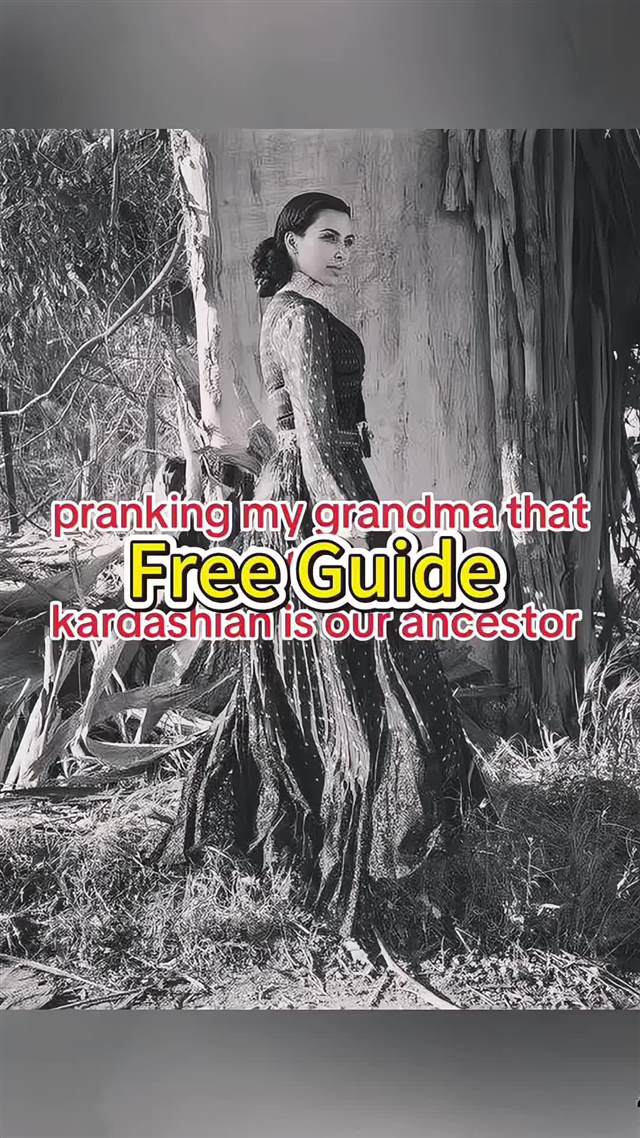
But a caption problem is not the same as an images problem. TikTok’s oEmbed API also returns a static thumbnail frame for every video, separate from the caption entirely, and that thumbnail is exactly what this piece now uses. The image above is a real screen grab pulled directly from a posted TikTok video: the actual fake, sepia-filtered “ancestor” photo circulating as part of this trend. The image below is a second real screen grab, from a different creator’s video, showing an actual on-screen caption reading “pranking my grandma that [Kim] Kardashian is our ancestor” layered directly over the same kind of fake vintage photo. Both videos are linked directly above so the original posts can be checked firsthand. Both are genuine frames from genuine posted videos, not illustrations, and neither carries the spam-tag caption problem, because a thumbnail image and a caption are two separate fields in TikTok’s own API response.
One honest note on the second image: it also contains a yellow “Free Guide” graphic baked into that specific video frame, unrelated to the prank itself and most likely a leftover template element from whatever editing app the creator used. It’s left in rather than cropped around, since this is a real, unedited screen grab and not a cleaned-up recreation. The rest of the piece is built on what’s independently confirmed: New Engen’s dated trend report describing the format, and the real, sourced facts about the tools and platforms (MyHeritage, Ancestry.com, prior TikTok prank trends) that explain why it works. No single creator or specific moment could be confirmed as the trend’s origin, either, so this piece doesn’t guess at one.
Quick Answers
What is the ancestor photo prank? It’s a TikTok prank where a creator sends a parent or grandparent a fake, vintage-styled photo and claims it’s a real ancestor found through an Ancestry.com search, then reveals the photo is fake after filming the reaction.
Are the photos used in the ancestor photo prank real? No. They’re either AI-generated portraits built from the creator’s own selfie using a historical-photo filter, or a real photo, most often cited as a Kim Kardashian editorial shot, run through a black-and-white vintage treatment.
Why do people fall for the ancestor photo prank? Ancestry.com’s own hint system and consumer DNA testing have spent years normalizing the idea that an unfamiliar relative can surface out of nowhere, so a text claiming exactly that doesn’t read as suspicious on its own.
Who started the ancestor photo prank trend? No single originating creator or moment could be confirmed. It appears to have spread rapidly across many accounts at once in the run-up to September 2026 rather than tracing back to one clear first video.
Is this the first TikTok prank built around fooling a parent? No. The 2022 celebrity death prank and 2026’s “AI Homeless Man” prank both followed a similar structure, a younger creator using a tool or claim an older relative can’t independently verify, before revealing the deception on camera.