
Passinho do Jamal: TikTok’s Brazilian Dance Trend and Who Really Created It (2026)
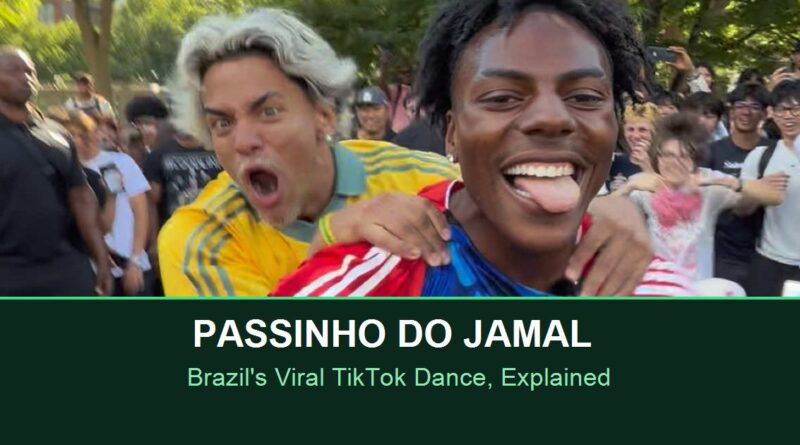
Hero image is a real TikTok video still from Arthur Lima’s own account (@artthuroficial_), captured during his viral crossover moment with IShowSpeed. Credit: @artthuroficial_/TikTok.
Passinho do Jamal is the footwork-and-arm dance that turned up everywhere in 2026: on TikTok Brazil, in a New York street video with global streamer IShowSpeed, reportedly among footballers at the World Cup, and even worked into a Thailand candle festival. The dance is real, the international reach is real, and so is the argument underneath it: the two Recife friends who actually built the choreography say a much bigger influencer took the spotlight without giving them credit.
- What it is: a simple side-to-side footwork step with a synchronized arm movement, set to brega-funk, easy enough that kids, footballers, and K-pop stars have all picked it up on camera
- Who made it: Romero Júnior (“Jamal da Capital”) and Pedro Henrique (“Eo Chapa”), childhood friends from the Santo Amaro/Campo do 11 area of Recife, Pernambuco
- How it blew up: Jamal first posted it years before anyone noticed; it only went viral once Eo Chapa built the 2025 track “Toma Botada” around it
- The global moment: Rio de Janeiro creator Arthur Lima became the dance’s best-known face, including a viral joint TikTok with IShowSpeed timed to the 2026 World Cup
- The real dispute: in August 2026, Jamal publicly accused Arthur Lima of letting international audiences believe he created the dance, a fight extensively covered by Brazilian entertainment press with no public resolution since
In this article
What is the “Passinho do Jamal”?
Passinho do Jamal is a short, repeatable dance step: feet moving side to side, a synchronized arm swing, and a bit of body sway timed to a brega-funk beat. Brega-funk is a genre out of Recife and the wider state of Pernambuco in Brazil’s Northeast, distinct from Rio de Janeiro’s better-known funk carioca sound, though the two scenes share a lot of dance vocabulary.
“Passinho” itself just means “little step” in Portuguese, and it’s a generic term Brazilian street-dance culture has used for decades, not a name unique to this one routine. Rio’s own passinho tradition dates back to the early 2000s funk carioca scene, grew into organized dance battles, and was the subject of the 2012 documentary A Batalha do Passinho.
It was even performed at the opening ceremony of the 2016 Rio Olympics. Passinho do Jamal is a newer, separate move from a different regional scene that happens to use the same generic word, not a continuation of that specific Rio lineage.
What makes this particular passinho notable is how far it traveled outside Brazil, and how quickly, once the right song and the right creator picked it up.
Who actually created it: two friends from Recife
The Passinho do Jamal was built by two childhood friends from the Santo Amaro area of Recife, in Pernambuco: Romero Júnior, who performs as Jamal da Capital, and Pedro Henrique, known as Eo Chapa. Both were in their early twenties as the dance broke through nationally in 2025, and neither was working in entertainment at the time. Jamal was a mason’s assistant. Eo Chapa delivered water for a living.
Jamal has said in interviews that the step itself isn’t something he invented from nothing: “Esse passinho do ‘pé pro lado e pro outro’ é antigo no Brega Funk. Eu só acrescentei as mãos” (“This ‘foot to one side and the other’ step is old in brega-funk. I just added the hands”). He first posted a version of the choreography years before it caught on, reportedly as early as 2019, trying to get noticed within the brega-funk scene. It didn’t work, at least not right away.
The breakthrough came in 2025, when Eo Chapa built a track around the dance, “Toma Botada,” with MC Rogê, after getting the idea in the shower while listening to Rio funk playlists. By late November 2025, more than 160,000 TikTok videos were using the choreography.
The song had reached the number one spot on TikTok Brazil’s trending list and racked up roughly 7 million Spotify streams. “A gente pode dizer que a gente venceu, né? Superamos um obstáculo juntos” (“We can say we won, right? We overcame an obstacle together”), Jamal said of the moment, five years after his first attempt at posting it.
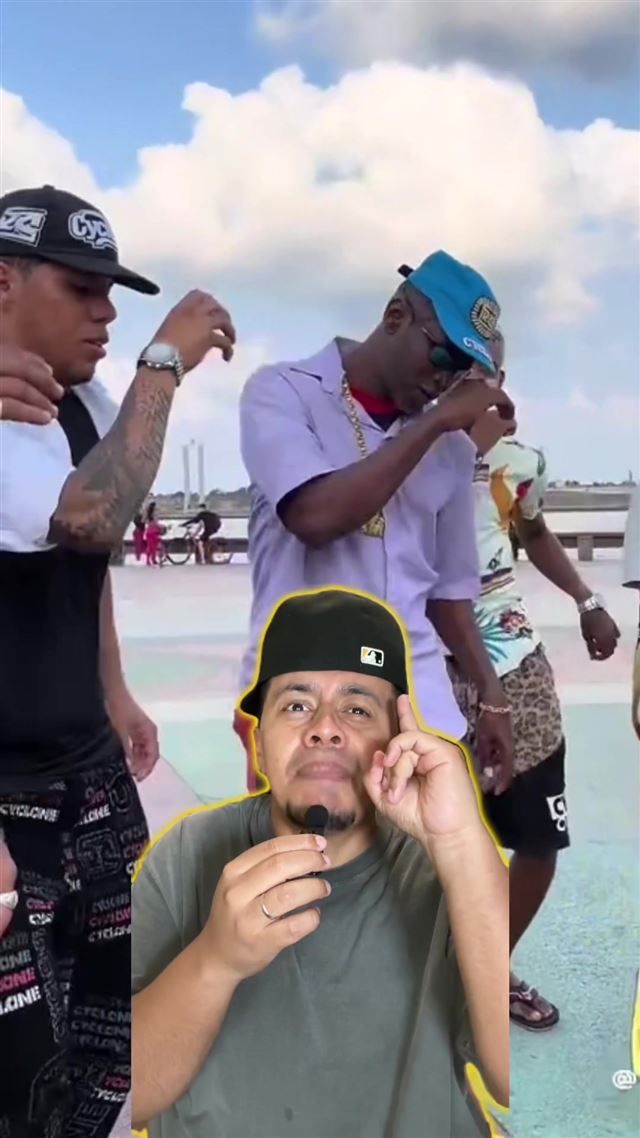
A separate TikTok video, explaining the origin and tagging Jamal directly, has circulated as part of that same wave of recognition:
@otarsooliveira a origem do passinho do @jamaldacapital✔️ #jamal #passinho #viral #passinhodojamal
♬ Toma Botada – Bacana no Beat & Eo Chapa & MC Rogê
Why the choreography is so easy to pick up
Part of why Passinho do Jamal crossed borders as fast as it did is that there’s almost no barrier to trying it. It’s a side-step and an arm swing, not a technical routine, which is exactly the quality Jamal himself points to when he describes his one real contribution as “just adding the hands” to a step that already existed. Brazilian coverage of the trend has specifically noted it’s popular with children, who can pick it up in a single viewing, alongside adults doing the exact same version.
That low skill floor is also, functionally, a growth engine. A dance that takes real practice limits who bothers to film themselves attempting it. A dance anyone can do in one take is a dance a stadium of unrelated people, a classroom in Thailand, or a global streaming star with zero dance training can all plausibly perform on camera, which is close to what happened here.
Arthur Lima, the World Cup, and the IShowSpeed crossover
The creator most responsible for turning Passinho do Jamal into an international story isn’t Jamal or Eo Chapa. It’s Arthur Lima, a Rio de Janeiro-based TikToker (@artthuroficial_) with a following in the tens of millions, who became the choreography’s most visible teacher and performer well beyond Brazil’s borders.
Arthur Lima’s biggest single crossover moment came around the 2026 FIFA World Cup. IShowSpeed, the American streamer with one of the largest live audiences on the internet, released his own World Cup single, “Champions (WC 26),” on June 1, 2026, ahead of the tournament. FIFA confirmed the track for its official World Cup album days later, and IShowSpeed performed it live at the World Cup closing ceremony in New York on July 19, 2026.
Around that same stretch, Arthur Lima and IShowSpeed posted a joint TikTok, filmed on a New York street with a crowd gathered around them, dancing together to “Champions (WC 26).” The video is real and independently verifiable: it’s posted directly on Arthur Lima’s own account, captioned simply “@IShowSpeed.”
@artthuroficial_ @IShowSpeed
♬ Champions (WC 26) – iShowSpeed
Clip accounts that reposted the moment across TikTok, Instagram, and Facebook widely described it as Arthur Lima teaching IShowSpeed his signature Brazilian dance moves. It’s the clearest, most verifiable instance of Arthur Lima’s Brazilian-dance persona reaching a genuinely global, non-Brazilian audience through a single celebrity crossover.
It’s worth being precise about what’s confirmed here: the video itself is real and set to IShowSpeed’s own World Cup anthem rather than a track explicitly branded “Passinho do Jamal.” No press outlet has published a frame-by-frame breakdown confirming the exact steps match Jamal’s original choreography move for move.
What’s not in doubt is that this is Arthur Lima’s biggest documented global dance crossover, and it happened while he was already the most visible face teaching Brazilian footwork dances internationally, Passinho do Jamal included.
Footballers, K-pop artists, and Brazilian stars who joined in
The World Cup crossover wasn’t the only celebrity attention the dance picked up in 2026. Brazilian magazine CartaCapital, in a July 2026 feature on the trend, reported that footballers including Vinícius Júnior, Lamine Yamal, and members of Cape Verde’s national team performed the dance during World Cup coverage, alongside Brazilian musical artists and, per that same report, at least one Korean pop act.
Domestically, Brazilian TikTok and radio coverage has pointed to singer Ivete Sangalo, singer João Gomes, TV presenter Adriane Galisteu, and Cruzeiro forward Kaio Jorge, who did the dance on camera after his team’s Campeonato Mineiro final win, as examples of the choreography reaching well past its original teenage TikTok audience.
The most widely cited K-pop connection is BTS member j-hope, who posted himself performing a Brazilian brega-funk-style dance and was described in some Brazilian entertainment coverage as doing “passinho do Jamal.” It’s worth flagging directly: this site’s own reporting on TikTok’s “Six Seven” trend already documents a verified j-hope dance video tied to a different Brazilian brega-funk track, not this one, and Brazilian press hasn’t always drawn a clean line between the two. More on that overlap below.
The real dispute: who gets the credit?
The tension between Passinho do Jamal’s actual creators and its most famous international ambassador became public in early August 2026. Between July 28 and 30, a group performed the dance at Thailand’s Ubon Ratchathani Festival of Candles, under a “Brazilian Trend” theme. Arthur Lima posted a reaction to the clip, celebrating it in English.
Jamal da Capital responded publicly, accusing Arthur Lima of letting an international audience believe he had created the dance himself. “O criador sou eu pai, calma aí,” Jamal said in a video response, roughly translated as “I’m the creator, man, hold on.” He went further, suggesting Arthur Lima’s use of English specifically was aimed at an audience that wouldn’t know better: “ele fala até em estrangeiro pra o pessoal dos EUA pensarem que foi ele quem criou a dança.”
Arthur Lima pushed back on the accusation. He said he had never claimed to be the dance’s creator, that his post was only meant to celebrate the choreography reaching another continent, and that he had, in his own view, done real work helping popularize the passinho outside Brazil. The dispute was covered extensively by Brazilian entertainment outlets, including Leia Já, Terra, Portal Leo Dias, Rádio NN, and Rap Mais, and drew in other figures in the funk scene, including artist Borges, who publicly sided with Jamal.
The underlying frustration predates the August flare-up. CartaCapital’s July 2026 feature on the trend reported that the choreography spread for months without any mainstream attribution to Jamal at all, until an Instagram account called Brega Bregoso specifically surfaced his identity to a wider audience.
Researcher Thiago Soares, quoted in that piece, framed the pattern in broader terms: “Via de regra, a gente não vê marcos históricos quando se trata da arte periférica” (“As a rule, we don’t see historical recognition when it comes to art from the periphery”). The same report noted Jamal is pursuing formal registration of the choreography as his own creation.
As of this writing, there’s no public record of the dispute being resolved, of Arthur Lima issuing a formal on-record credit to Jamal and Eo Chapa, or of any joint statement between the two sides. Jamal has said directly that his issue was never with other people performing the dance, only with the public associating its creation with someone else.
Not the first time: Arthur Lima and TikTok’s “Six Seven” trend
If the shape of this story feels familiar, it should. This isn’t the first time in 2026 that Arthur Lima has become the international face of a Brazilian brega-funk dance he didn’t create.
Our earlier coverage of TikTok’s “Six Seven” trend already named Arthur Lima as the central figure behind Brazil’s own “Six Seven” choreography, a separate dance built on an unrelated track by DJ Cabello, DJ Tchouzen, and SoundMusic Original, not Jamal and Eo Chapa’s “Toma Botada.” That piece also documented a verified BTS j-hope video performing the Brazilian “Six Seven” choreography and then following Arthur Lima’s account.
The two trends are genuinely distinct: different songs, different original creators, different origin dates. But they share a brega-funk lineage, a very similar side-step-and-arm-swing movement vocabulary, and, in both cases, the same Rio-based creator ending up as the internationally recognized face of a dance that started somewhere else.
Some Brazilian press coverage has blurred the two further, describing j-hope’s “Six Seven” video as him performing “passinho do Jamal,” even though the two are documented separately with different soundtracks. Readers encountering both trends online should treat that overlap as a real, recurring source of public confusion, not evidence the two dances are actually the same thing.
Quick answers
Who created the Passinho do Jamal? Romero Júnior (“Jamal da Capital”) and Pedro Henrique (“Eo Chapa”), two childhood friends from the Santo Amaro area of Recife, Pernambuco. Jamal built the choreography on top of an existing brega-funk footwork step; Eo Chapa produced the 2025 track “Toma Botada” that made it go viral.
Is Arthur Lima the creator of the Passinho do Jamal? No. Arthur Lima, a Rio de Janeiro TikToker, is the dance’s best-known international popularizer, not its creator. He’s been publicly accused by Jamal da Capital of letting audiences believe otherwise, an accusation he denies.
Did IShowSpeed really do the dance with Arthur Lima? Yes, verifiably. Arthur Lima’s own TikTok account posted a video of the two of them dancing together, set to IShowSpeed’s own 2026 World Cup single “Champions (WC 26),” widely shared as one of Arthur Lima’s biggest global crossover moments.
Is the Passinho do Jamal the same dance as TikTok’s “Six Seven” trend? No, though they’re frequently confused. They’re built on different songs by different creators. Arthur Lima happens to be the internationally recognized face of both.
Has the credit dispute been resolved? Not publicly, as of this writing. Jamal da Capital has said his objection isn’t to people dancing the choreography, only to the public crediting its creation to someone else.
Reporting on the dispute draws on coverage from Rap Mais and CartaCapital. Background on the dance’s creation and viral breakout draws on Diário do Nordeste.