Six Seven Trend Explained: TikTok’s Meme That Won’t Die (2026)
TikTok logo/trademark referenced in this article’s hero image is property of its respective owner, used here for editorial identification purposes.
The six seven trend was supposed to be dead by March 2026. Teenagers killed it themselves, mocking anyone still saying it as hopelessly behind. Then, eight time zones away in Brazil, a completely unrelated song built around the same two numbers took off, and by summer the trend was bigger than it had ever been the first time around, cameo from a member of BTS included.
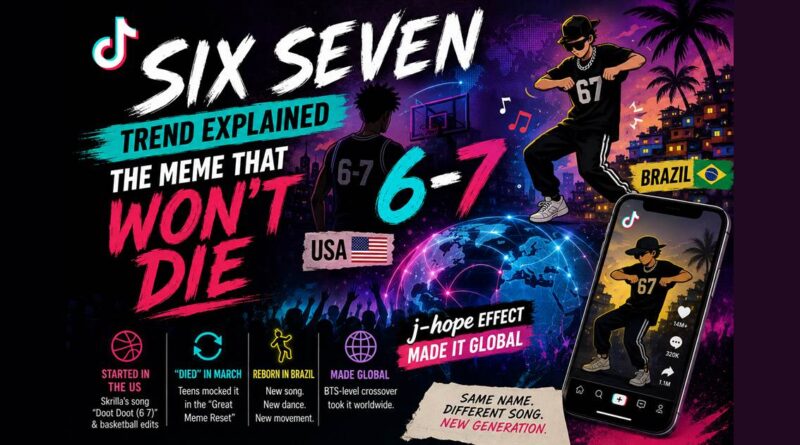
- Where it started: Rapper Skrilla’s 2024 song “Doot Doot (6 7),” picked up by basketball edit accounts referencing LaMelo Ball’s 6’7″ height
- Where it “died”: By March 2026, teens were actively mocking continued use of the phrase, a moment trend-watchers called the “Great Meme Reset”
- Where it came back: Brazil, months later, through an entirely unrelated brega-funk track also called “Six Seven,” popularized by Rio creator Arthur Lima
- Who made it global again: BTS’s j-hope posted himself dancing to the Portuguese version, and the crossover moment is still driving views months later
In this article
What the six seven trend actually means
Here’s the honest answer: the six seven trend doesn’t mean anything fixed, and that’s exactly the point. The phrase comes from Philadelphia rapper Skrilla’s drill track “Doot Doot (6 7),” leaked in late 2024, officially released February 7, 2025. Skrilla has said flatly he never attached a specific meaning to the numbers, and doesn’t want to: “I never put an actual meaning on it, and I still would not want to.”
Theories floated everywhere, from a street reference to a police ten-code for a death notification. None of that mattered much. The ambiguity is exactly what let it spread, since anyone could use “six seven” to mean whatever they wanted, or nothing, which made it about as frictionless as a phrase can get.
The number pairing got an early assist from basketball content, since NBA guard LaMelo Ball is listed at 6 feet 7 inches. High school player Taylen Kinney, who plays for Overtime Elite, used the phrase so often that he picked up the nickname “Mr. 6-7.”
A March 31, 2025 video from YouTuber Cam Wilder featuring a young fan named Maverick Trevillian yelling the phrase with an upward hand gesture pushed it further into the mainstream. By that fall, Dictionary.com named “67” its 2025 Word of the Year, official confirmation the six seven trend had gone fully mainstream.
The US six seven trend’s rise, and its very public death
This is the part that makes it worth revisiting instead of filing under “kids say a number now.” It went mainstream fast, and not in a small way. Clash Royale, Overwatch 2, and Fortnite all shipped six-seven-themed emotes. Pizza Hut, McDonald’s UAE, and Domino’s ran six-seven-branded promotions that same fall. Pope Leo XIV did the hand gesture at a Vatican meeting with young Catholics in May 2026. Kamala Harris briefly rebranded her campaign’s account “Headquarters 6-7” in February 2026, then reverted it within a day once the backlash called it out for being exactly what it was.
That level of institutional adoption is usually a meme’s death sentence, and it was here too. By March 2026, in what trend-watchers dubbed the “Great Meme Reset,” the same teenagers who’d made “six seven” ubiquitous started mocking anyone still using it, treating it as a marker that brands and adults had ruined something that used to be theirs. On paper, that should have been the end of the story.
The Brazilian revival: a different song entirely
Except it wasn’t the end, because what came back in Brazil wasn’t a revival of the six seven trend at all. It just happened to share a name. Produced by DJ Cabello, DJ Tchouzen, and SoundMusic Original, the Brazilian “Six Seven” is a brega-funk track with its own choreography built in: synchronized arm movements, lateral steps timed to the beat, something closer to an actual dance routine than the original’s shouted catchphrase and single hand gesture.
Rio de Janeiro creator Arthur Lima, pushing close to 15 million TikTok followers, turned into this new six seven trend’s central figure almost by default. Teach a choreography enough times and your name ends up attached to nearly every tutorial version that follows, which is more or less what happened to him.
The result is a genuine coincidence dressed up as a sequel: two six seven trends, same two numbers, same general “everyone’s doing it” energy, but built on unrelated songs, in different languages, driven by different creators, on different continents, months apart. By August 2026, trend-tracking platforms were still listing the Brazilian six seven trend as one of the platform’s dominant formats, months after the original US version had already been declared over by its own audience.
How BTS’s j-hope turned it into a global crossover
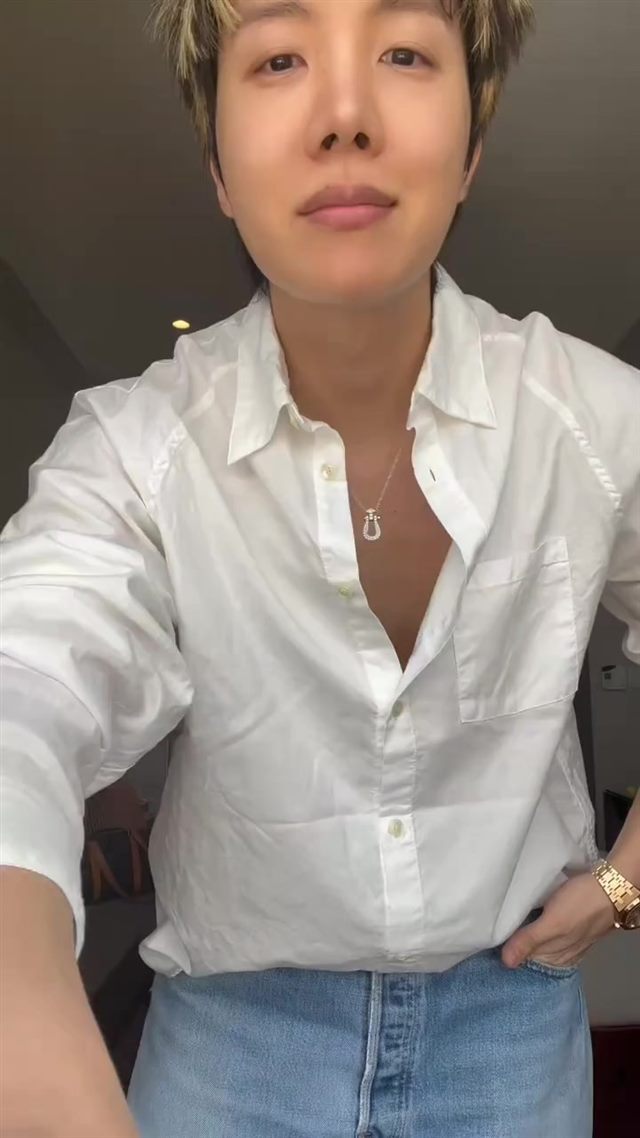
One moment pushed this past a regional story: j-hope, BTS’s main dancer, posted himself performing the choreography to the Portuguese version, then followed Arthur Lima’s account right after. For a fanbase that tracks a K-pop idol’s every move as a matter of routine, an unprompted crossover into a Brazilian funk dance trend read as genuinely unscripted, not a marketing beat, and it spread like it. Screenshots and reaction videos of the follow were circulating within minutes. Fan reposts of the clip itself picked up millions of views entirely on their own, no official push required.
@army.mom.ot7 #Jhope haciendo el “six seven” #67 @hobipower
♬ sonido original – BTS OT7💜
That single video is a large part of why the Brazilian six seven trend has outlasted the US original by so much. Trend-tracking reports from August 2026 credit j-hope’s involvement with pushing the format’s cumulative reach past 75 million views, months after his own video first went up. A K-pop idol with a global, highly engaged fanbase joining a regional dance trend doesn’t just add views, it adds an entirely new, sustained audience that keeps a trend circulating long after its original local audience would have moved on.
Two six seven trends, same name: side by side
US “Six Seven” (2024-2025)
- Source: Skrilla’s “Doot Doot (6 7),” English drill track
- Format: shouted catchphrase + one hand gesture
- Key figures: Taylen Kinney, Maverick Trevillian, basketball edit accounts
- Status by August 2026: declared over by its own audience in March
Brazilian “Six Seven” (2026)
- Source: unrelated brega-funk track by DJ Cabello, DJ Tchouzen & SoundMusic Original
- Format: full choreography with synchronized arm and step movements
- Key figures: Arthur Lima (~15M followers), later BTS’s j-hope
- Status by August 2026: still listed among TikTok’s dominant active trends
Why a “dead” meme having a second life actually matters
It’s tempting to shrug this off as coincidence, but the second act says something real about how trends move now. A phrase doesn’t get one lifespan anymore. It gets as many as there are audiences willing to pick it up and rebuild it from nothing. The US version died specifically because brands, politicians, and eventually a Pope adopted it, which told teenagers, correctly, that it no longer belonged to them. The Brazilian version dodged that fate mostly by being an entirely different piece of media, something that had to be discovered rather than handed down, right up until a global celebrity turned it into the same kind of institutional moment all over again. Whether that ends up killing this version too is worth watching for its own sake.
For another example of a niche piece of content snowballing into a genuine commercial phenomenon, see our coverage of the Labubu economy, which followed a similar arc from collector niche to global retail story.
Does j-hope joining mean the Brazilian six seven trend is doomed too?
It’s a fair question, and the honest answer is nobody knows yet. The US six seven trend didn’t die from one celebrity, it died from accumulated institutional adoption: a stack of brands, a presidential campaign account, a Pope, each one chipping away at the sense that the phrase still belonged to the people who made it. J-hope’s involvement in the Brazilian six seven trend is a single data point, not a stack. He’s also a different kind of adopter than Pizza Hut or a campaign staffer: a working artist genuinely participating in dance culture, not a brand bolting a meme onto a marketing calendar. That distinction might matter to the audience that ultimately decides whether a trend still feels authentic enough to keep doing.
There’s also a structural difference worth naming. The original six seven trend was a phrase, infinitely reproducible with zero skill required, which is exactly why brands found it so easy to bolt onto anything. The Brazilian six seven trend is an actual choreography, something that takes a bit of practice to perform well, which raises the floor for lazy, low-effort adoption in a way a shouted catchphrase never could. That might be the real reason this version has more room to run than trend-watchers currently expect.
Quick answers
What does the six seven trend actually mean? Nothing fixed. The phrase’s creator, rapper Skrilla, has said he never assigned it a specific meaning on purpose, which is a large part of why it spread so easily.
Is the six seven trend one thing or two different things? Two. The original 2024-2025 US version is a catchphrase built on Skrilla’s song and basketball edits. The 2026 version driving current views is an unrelated Brazilian brega-funk dance that happens to share the same name.
Did j-hope from BTS really do the six seven dance? Yes. He posted a TikTok of himself performing the Brazilian choreography to the Portuguese version of the song and followed creator Arthur Lima afterward.
Is the six seven trend still popular in August 2026? The Brazilian version is, and trend-tracking platforms were still listing it among TikTok’s dominant active formats this month. The original 2024-2025 US catchphrase version was declared over by its own audience back in March.
Will the Brazilian six seven trend die out the same way the US version did? Too early to say. The US version collapsed under a stack of brand and institutional adoption, while the Brazilian six seven trend has so far had one celebrity crossover rather than a wave of corporate co-opting, and it’s an actual choreography rather than a zero-effort catchphrase, both of which may give it more staying power.
Background on the meme’s origin and US timeline draws on the Wikipedia entry on the 6-7 meme. Reporting on j-hope’s involvement in the Brazilian trend is available via Maxx FM.