TikTok Election Integrity: What TikTok Says It Does During Elections (2026)
TikTok election integrity refers to the rules, teams and tools TikTok says it uses to protect elections on its platform from misinformation. With US midterm elections on Tuesday, November 3, 2026, this guide sets out what TikTok says about its election integrity work, in its own words, and what its pages do not say.
This guide to TikTok election integrity reports what TikTok says on three pages, all read on October 25, 2026: TikTok’s Safety Center page Protecting the integrity of elections, and two TikTok Creator Academy pages, Understanding TikTok’s policy on integrity and authenticity and Navigating TikTok’s policies on political ads. TikTok changes its rules, so everything below is a snapshot of TikTok’s own description. This site adds no analysis and no opinion.
What to know:
- What TikTok election integrity rules do not allow: misinformation about how, when and where to vote, voter eligibility, election procedures and results, per TikTok.
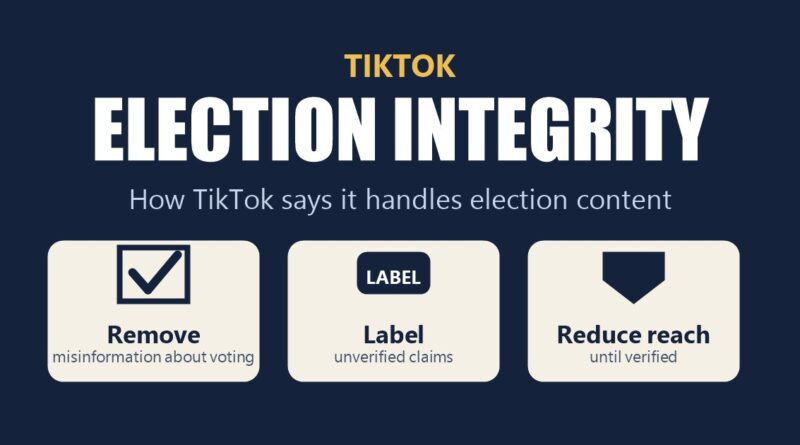
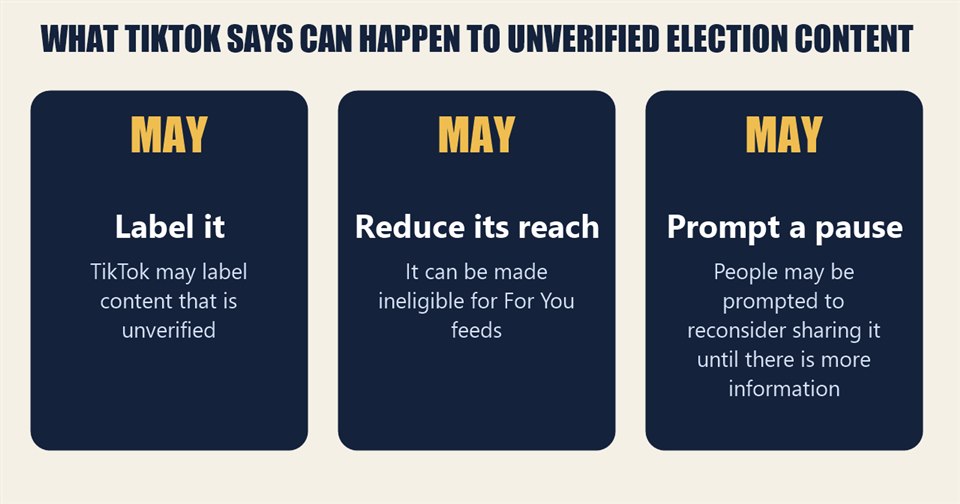
- Unverified claims: TikTok says it may label them, make them ineligible for For You feeds, and prompt people to reconsider sharing them.
- Fact-checking in TikTok election integrity work: TikTok says it works with more than 20 fact-checking organizations that assess content in more than 50 languages.
- Political money under TikTok election integrity rules: TikTok says it does not allow paid political promotion, that politician and party accounts have no access to advertising features, and that politician, party and government accounts have no access to monetization features such as gifting or tipping.
In this article
What TikTok Says About TikTok Election Integrity
TikTok’s Safety Center page opens: “Elections are important moments of community conversation. During these civic processes, we remain focused on keeping people safe and protecting the integrity of the TikTok platform.” It says TikTok does this “by enforcing a set of robust policies aimed at preventing the spread of misinformation, elevating authoritative information from trusted sources, and collaborating with experts who help us evaluate and improve our approach.”
TikTok’s Creator Academy page on integrity and authenticity says: “Elections are important events that often spark lively conversations and debate. We aim to respect these discussions while ensuring TikTok remains a space that brings people together. We welcome informed civic conversations, but draw the line at content that could mislead voters or cause real-world harm.”
The TikTok Election Integrity Team and Its Approach
TikTok says it continues “to expand and invest in our Election Integrity team, which is tasked with identifying and responding to risks posed by upcoming elections based on current and historic factors.” The team is “staffed by multi-disciplinary experts in democracy, elections, civil society, and technology who bring a wealth of policy, technical, and local expertise to our preparedness efforts,” TikTok says, and “during elections, they work tirelessly to stay ahead of evolving threats.”
The Safety Center page is organized under four headings: fighting election misinformation, combating covert influence operations, building community resilience against election misinformation, and designing policies that promote authenticity and creativity. The sections on TikTok election integrity below follow that order.
What Counts as Election Misinformation in TikTok Election Integrity Rules
TikTok says it works to protect the integrity of elections “by removing or reducing the reach of misinformation, which we define as false or misleading content, regardless of intent.” According to TikTok’s Safety Center page, this “includes false or misleading information about how to vote, how to register to vote, the eligibility qualifications for candidates, and the procedures that govern implementation of elections.”
TikTok’s Creator Academy page lists what is not allowed in its civic and election integrity policy:
- Misinformation about how, when and where to vote, or register to vote.
- Misinformation about voter eligibility or candidate qualifications.
- Misinformation about laws or procedures for elections, referendums, ballot initiatives or censuses.
- Misinformation about election results.
- Instructions or encouragement for illegal voting or electoral interference, including voter intimidation or threats to election workers and electoral observers.
- Calling for unlawful disruption of a valid election outcome, “such as through a coup.”
- Paid political advertising, “whether or not it’s disclosed.”
- Campaign fundraising by Government, Politician or Political Party accounts.
The same page has a separate list of content that is ineligible for the For You feed: “unverified claims about an election, such as claiming all ballots are counted before a final tally”; “statements that misrepresent authoritative civic information, such as a false claim about the text of a parliamentary bill”; and suspected paid political advertising. This site explains the For You feed in TikTok For You Feed: How TikTok Says Its Recommendation System Works.
TikTok says it detects election misinformation “by using a combination of technology and human moderators, and by working with International Fact-Checking Network-accredited fact-checking organizations.” It says it has “specialized misinformation moderators with enhanced training and access to tools like our global database of previously fact-checked claims,” and “teams on the ground who partner with experts to prioritize local context and nuance.”
What Happens to Unverified Election Content Under TikTok Election Integrity Rules
TikTok acknowledges that during elections “information can rapidly evolve based on real-world events, and sometimes it may not be clear whether a claim is true or false.” For that case, its Safety Center page says: “When content is unverified, we may label it, reduce its reach by making it ineligible for For You feeds, and prompt people to reconsider sharing it until there’s more information.”
The Creator Academy page adds that TikTok may “add warning labels to content that our fact-checking partners cannot verify,” and that “to be cautious, unverified information about crises, major civic events, or content temporarily under review by fact-checkers is also ineligible for the For You feed.” It adds that TikTok “may also apply warning labels or prompt users to pause before sharing unconfirmed content.”
The Fact-Checking Program Behind TikTok Election Integrity
TikTok says “fact-checking online misinformation is specialized work, which is why we work with more than 20 IFCN-accredited fact-checking organizations who have technical training, resources, and industry-wide insights to impartially assess online misinformation.” IFCN is the International Fact-Checking Network, which TikTok names elsewhere on the page. Per TikTok, these organizations assess the accuracy of content in more than 50 languages.
TikTok describes the partners’ role this way: “These independent partners do not moderate content directly on TikTok, but assess whether a claim is true, false, or unsubstantiated so that our moderators can take action based on our Community Guidelines. They also share proactive insight reports that help us detect harmful misinformation and anticipate misinformation trends.” TikTok adds that “every three months, we report on our enforcement efforts, including against our rules on election misinformation,” in its Community Guidelines Enforcement Reports.
Covert Influence Operations and TikTok Election Integrity
TikTok says “during elections, bad actors may seek to use deceptive behaviors in an effort to affect an election outcome or process,” and that it takes action “to remove covert influence operations.” It describes these as “attempts to influence or sway public opinion while misleading people or our platform’s systems about the identity, origin, operating location, popularity, or purpose of an account.”
The Election Center, Labels and Reporting in TikTok Election Integrity
TikTok says that “in the lead up to elections, we work with fact-checking organizations, electoral commissions, and civil society to create local election information resources that provide our community access to authoritative information about the election, including how to register to vote or where to vote.”
TikTok says it adds “labels to election-related content that direct people to our in-app Election Center, as well as reminders on relevant hashtags that encourage people to be aware of misinformation and follow our rules.” It also says it runs media literacy campaigns, and that people can report content they believe violates its misinformation policies through “our easy-to-use in-app reporting feature.”
Paid Political Promotion and Political Accounts
No paid political promotion
TikTok says: “We’ve long prohibited paid promotion of political content on TikTok.” Specifically, “we don’t allow paid political promotion, political advertising, or fundraising by politicians and political parties, including both traditional paid ads or creators receiving compensation to support or oppose a candidate for office.” It adds that “accounts belonging to politicians and political parties do not have access to advertising features, and neither these accounts nor accounts belonging to governments have access to our monetization features, such as gifting or tipping.”
TikTok’s Creator Academy page on political ads says organic political content is allowed within the Community Guidelines, and that “if you’re getting paid to create anything political, you’re breaking our rules, and could result in actions against your account and even a permanent ban.” For branded content, it says creators “may not reference or take sides with any political candidate, current or former political leaders, political parties, or political organizations,” and should not mix organic political content with paid products like Spark Ads and Promote. This site explains Promote in TikTok Promote.
TikTok’s integrity page adds that eligible government entities may advertise in specific, approved categories after completing a certification process, and it lists public health and safety information, tourism and culture as examples. It also says “official electoral management bodies may run informational ads about election processes.”
How TikTok treats government, politician and political party accounts
TikTok says governments, politicians and political parties “play important and high-profile roles in civic processes and civil society,” and that its Community Guidelines “apply equally to all content.” It says its account policies for them “seek to strike a balance between enabling people to engage with their content while also protecting our community from being exposed to harmful content.”
- Strikes: TikTok says it still removes violative content from these accounts. “Instead of removing their account once they reach our platform’s strike limit for violations,” it says, “we will restrict their ability to reach large audiences by making their content ineligible for recommendation to the For You and Following feeds for 90 days.”
- Severe violations: TikTok says it will still remove accounts “regardless of who they belong to” for any single severe content violation, “such as showing real-world violence or torture.”
- High-risk periods: TikTok says it can impose additional restrictions on these accounts “if they present a particularly high risk to public safety” during “periods of civil unrest, elections, or other high-risk social and political environments.” If such an account “promotes violence, hate or misinformation during high-risk contexts,” TikTok says, it may stop the account from posting “for a period of 7 to 30 days, depending on the severity of the violation and associated risk.”
- Notice: TikTok says accounts are notified of the actions through inbox notifications.
- Public interest: TikTok says it also applies a label to some content that would ordinarily violate its guidelines but may be in the public interest because it appears in a documentary, educational, satirical or counter-speech context.
AI-Generated Content and TikTok Election Integrity
TikTok’s Safety Center page says its Synthetic and Manipulated Media policy “requires creators to label AI-generated content that shows realistic scenes,” and that it prohibits “AI-generated content that contains the likeness of a public figure if the content is used for endorsements or violates any other policy.” It defines a public figure as “an adult with a significant public role, such as a government official or politician.”
TikTok’s Creator Academy page lists among the content it does not allow AI-generated or significantly edited content that misleads about a matter of public importance, including “a public figure taking political stances, supporting products, or commenting on public issues they haven’t actually addressed” and “a political endorsement or condemnation that never happened.” The same page says unlabeled AI-generated or significantly edited content that shows realistic-looking people or scenes “may be removed, restricted, or labeled by our team, depending on the harm it could cause.”
For research on how many Americans get news on TikTok, see News on TikTok: Pew Finds 1 in 5 U.S. Adults Regularly Get It. For an AI-generated clip that spread across TikTok this fall, see Rumpelstiltskin Meme: The AI Clip Behind the TikTok Trend, and for another TikTok tool in TikTok’s own words, see TikTok Studio.
What TikTok’s Pages Do Not Say
- A 2026-specific TikTok election integrity plan: the pages read for this guide describe TikTok’s general election approach. They do not mention the November 3, 2026 midterm elections by name or describe steps specific to them.
- Numbers: the pages give no counts of videos removed, labeled or made ineligible for the For You feed. TikTok points to its quarterly Community Guidelines Enforcement Reports.
- Partners: the pages say “more than 20” fact-checking organizations and “more than 50 languages” but do not list the organizations.
- The Election Center: the pages mention an in-app Election Center but do not describe its contents or when it launches for a given election.
- Dates: the text of the Safety Center page shows no publication date, so the date of its latest changes is unknown.
Frequently Asked Questions
What is TikTok election integrity?
It refers to TikTok’s election-related rules and work, which TikTok says include removing or reducing the reach of election misinformation, working with fact-checkers, countering covert influence operations, directing people to an in-app Election Center and not allowing paid political promotion.
Does TikTok election integrity policy allow political ads?
TikTok says no: it does not allow “paid political promotion, political advertising, or fundraising by politicians and political parties,” including creators paid to support or oppose a candidate. It says organic political content is allowed within its Community Guidelines.
Under TikTok election integrity rules, what happens to claims it cannot verify?
TikTok says it may label the content, make it ineligible for For You feeds and prompt people to reconsider sharing it until there is more information.
How do I report election misinformation under TikTok election integrity rules?
TikTok says people can report content they believe violates its misinformation policies through its in-app reporting feature.
When are the 2026 US midterm elections?
Election Day for the 2026 US midterm elections is Tuesday, November 3, 2026.
Sources: TikTok Safety Center: Protecting the integrity of elections, TikTok Creator Academy: integrity and authenticity policy and TikTok Creator Academy: political ads (all read October 25, 2026).