TikTok’s Government Devices Ban Is Lifted. Critical Questions Remain (2026)
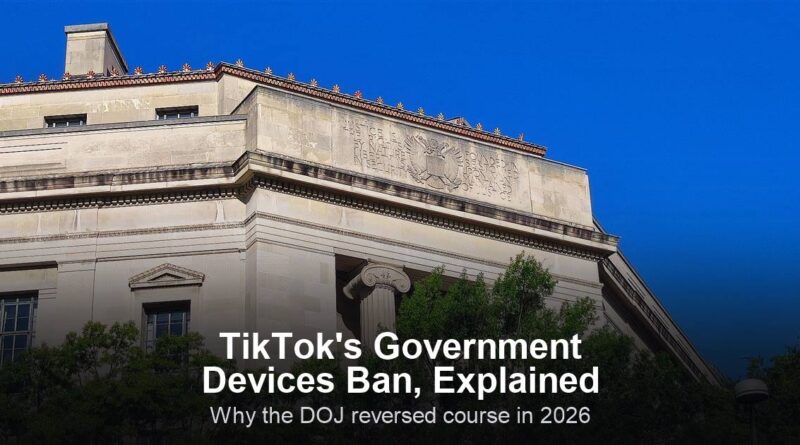
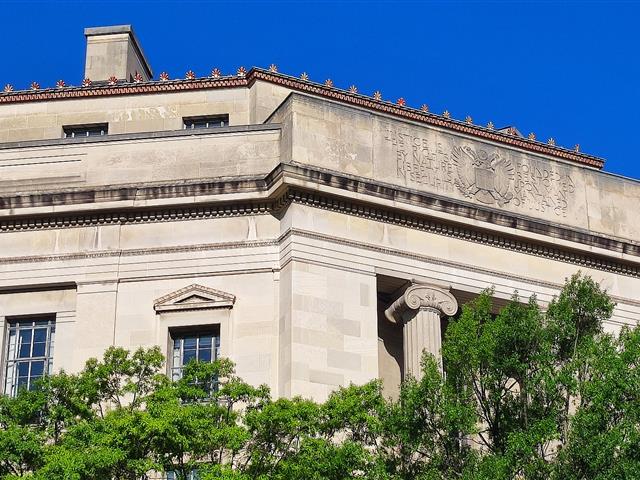
Credit: Robert F. Kennedy Department of Justice Building, Washington, D.C. Photo by Pelajanela, Wikimedia Commons (CC BY-SA 4.0).
TikTok’s government devices ban is over. For nearly three years, federal law barred the app from any phone or laptop issued by the U.S. government. As of this month, that’s no longer true, not because Congress repealed the law, but because the Justice Department decided the law no longer applies to the TikTok that exists today. The reversal is real and already in effect. Whether it should have happened is a different question, and a sitting U.S. senator says the government hasn’t actually answered it yet.
- What changed: the Justice Department’s Office of Legal Counsel ruled on July 16, 2026 that TikTok no longer qualifies as a “covered institution” under the 2022 No TikTok on Government Devices Act, and the White House’s Office of Management and Budget formally rescinded the 2023 ban directive on August 11, 2026
- Why: TikTok’s U.S. operations now run through TikTok USDS Joint Venture LLC, in which ByteDance holds roughly a 19.9% stake, below the controlling threshold the 2022 law was written around
- What didn’t change: individual federal agencies still get to decide for themselves whether to allow TikTok on their own devices, and several already disagree with each other
- Who’s objecting: Sen. Maria Cantwell (D-WA) says the DOJ hasn’t proven ByteDance’s operational ties to the app are actually severed, or who really controls the algorithm
In this article
What Actually Changed
TikTok’s government devices ban traces back to the No TikTok on Government Devices Act, passed in 2022, which banned federal employees from having TikTok on any device owned by the government, citing national security concerns tied to ByteDance, TikTok’s Beijing-based parent company. It was one of the first concrete federal actions against the app, well before the broader “divest or ban” fight that eventually reached the Supreme Court.
That law is still on the books, word for word. What changed is the Justice Department’s read of who it actually applies to. In a formal Office of Legal Counsel opinion dated July 16, 2026, the DOJ concluded that the 2022 law’s ban only covers applications developed or provided by an entity in which ByteDance holds a controlling stake. TikTok’s current U.S. operations, run through TikTok USDS Joint Venture LLC, don’t meet that bar anymore, on paper. On August 11, 2026, the White House’s Office of Management and Budget acted on that opinion and formally rescinded the 2023 directive that had implemented the ban across federal agencies.
How TikTok Got Here
TikTok’s government devices ban didn’t get lifted in a vacuum. It’s a direct downstream consequence of the much bigger divestiture fight TikTok fought and, depending on who you ask, won or survived earlier this year. Under the 2024 Protecting Americans from Foreign Adversary Controlled Applications Act, TikTok faced a nationwide ban unless ByteDance divested its controlling stake in the U.S. business, a law the Supreme Court upheld. Executive Order 14352, signed September 25, 2025, approved a specific divestiture structure as a “qualified” one, and the deal closed on January 22, 2026 with the formal creation of TikTok USDS Joint Venture LLC.
The new ownership structure is genuinely different from the old one. Oracle, private equity firm Silver Lake, and investment firm MGX each hold roughly 15% of the joint venture, 45% combined, as its managing investors. Other investors, including some of ByteDance’s own existing global backers, make up another 35%. ByteDance itself retains a minority stake of roughly 19.9%, below the threshold the No TikTok on Government Devices Act was written to target.
That 19.9% number is the entire legal hinge this whole reversal turns on: under the DOJ’s reading, a ByteDance stake that size, without a controlling interest, takes TikTok USDS out of the 2022 law’s reach entirely.
Not Everyone Agrees
Not every lawmaker is satisfied that TikTok’s government devices ban should have ended the way it did. Sen. Maria Cantwell (D-WA), a long-time TikTok critic on national security grounds, called the DOJ’s decision “deeply concerning” and laid out exactly what she thinks is still unresolved: “Federal phones contain sensitive government communications, contacts, and location data, making them attractive targets for foreign intelligence.”
Her objection isn’t really about the ownership math, it’s about whether the math is the right question at all. She’s pushed for Congress to get direct answers on three specific points before treating the app as cleared: whether operational ties between ByteDance and TikTok’s U.S. business have actually been severed in practice, who controls the recommendation algorithm day to day, and whether ByteDance retains any technical ability to access or update it.
Those are fair questions precisely because the OLC opinion doesn’t fully answer them. Legal ownership percentages are verifiable on paper in a way that operational independence, who actually has access to code and data day to day, isn’t, at least not from the outside. The DOJ’s opinion treats the ownership restructuring as sufficient on its own; Cantwell’s position is that ownership on paper and operational control in practice aren’t necessarily the same thing, and that Congress hasn’t been given the evidence to know which one actually applies here.
Agencies Are Already Splitting on It
The OLC opinion clears TikTok’s government devices ban legally, but it doesn’t mandate anything. Individual agencies still decide for themselves, and in the weeks since, they’ve made noticeably different calls. The Office of Personnel Management has started treating TikTok like any other social platform already permitted on government devices, alongside X and LinkedIn. The Nuclear Regulatory Commission has kept its outright ban in place as part of its own cybersecurity posture. NASA and the EPA have landed somewhere in between, requiring case-by-case approval rather than a blanket policy either way.
That split creates real, unglamorous problems that have nothing to do with geopolitics: mobile device management, endpoint security configuration, and federal records retention all now have to be worked out per agency, since anything an employee posts or receives on TikTok in an official capacity is potentially subject to the same FOIA rules as an email. Several agencies have already launched their own official TikTok accounts to reach the public, which only raises the stakes on getting that records question right.
The Bigger Picture: Cleared and Fined in the Same Year
Here’s the part that’s easy to miss if you only follow one TikTok legal story at a time: the same year the federal government lifted TikTok’s government devices ban and decided the app is safe enough for its own employees’ phones, TikTok also agreed to pay $400 million to settle a completely separate Justice Department lawsuit over children’s privacy violations. Both are real, both are final, and they’re not actually in tension with each other, they’re just about different things. The government-devices question is narrowly about foreign ownership and control. The $400 million settlement is about how TikTok, under any ownership, handled the data of millions of children under 13. A platform can genuinely clear one legal bar and still owe real money for failing a completely different one, and TikTok did both in the same year.
That’s arguably the most honest way to read where TikTok actually stands heading into the fall: not fully cleared, not still banned, but subject to several separate, ongoing forms of legal and political scrutiny that all move on their own timelines. TikTok’s government devices ban is over. The ownership questions Cantwell raised aren’t resolved, just legally moot for now. And the company’s broader privacy track record is still being litigated, settlement or not.
Quick answers
Is TikTok’s government devices ban actually over? Yes, as a matter of federal policy. The Justice Department’s Office of Legal Counsel ruled TikTok no longer qualifies as a “covered institution” under the 2022 law, and the White House’s OMB formally rescinded the 2023 ban directive on August 11, 2026.
Can federal employees download TikTok on their government phones right now? It depends entirely on their specific agency. The federal-wide ban is lifted, but individual agencies can still independently prohibit TikTok, and several already have, for cybersecurity or workforce-management reasons.
Why did the ban get lifted specifically now? Because TikTok’s U.S. ownership structure changed. Following a court-tested divestiture, ByteDance’s stake in the app’s U.S. operations dropped to roughly 19.9%, a minority position the DOJ says falls outside the scope of the 2022 law, which targeted apps under ByteDance’s controlling ownership.
Who owns TikTok now? TikTok USDS Joint Venture LLC, formed January 22, 2026. Oracle, Silver Lake, and MGX each hold roughly 15% as managing investors (45% combined). Other investors, including some of ByteDance’s existing global backers, hold about 35%. ByteDance itself retains roughly 19.9%.
Does this have anything to do with TikTok’s $400 million settlement? No, they’re legally unrelated. The government-devices ban was about foreign ownership and national security. The $400 million settlement is over children’s privacy violations. TikTok resolved both in 2026, but neither outcome affected the other.